
Introducing ArchaeoZooArchive – An Archaeological Natural History Archive!

The Florida Museum Environmental Archaeology Program is excited to bring a new adventure to all you Notes from Nature fans … the ArchaeoZooArchive … the first archaeological natural history transcribing project in Notes from Nature!

When we ask you, the wonderful community scientists, for help transcribing nature from natural history collections, we are typically talking about data from plant and animal specimens that have been collected over the past 100 years or so – maybe even as far back as 200 years! These records provide excellent insight to our modern biodiversity and environments and the data you transcribe is vital for understanding how we should cherish and manage our natural world. But you might be interested to know that all that modern specimen data provides only a TINY glimpse of a very long history of people’s relationships with nature. When you consider that people have been admiring, using, managing, and impacting natural resources for over a million years, you realize that 200 years is but the blink of an eye. So we bring you an opportunity to help scientists look deeper into time …
Here at the Florida Museum of Natural History, the Environmental Archaeology Program is devoted to the study of the deep history of human-environment interactions using the remains of plants, animals, and landscapes from archaeological sites. The Environmental Archaeology collections include literally millions of specimens from more than 800 archaeological sites representing over 10,000 years of prehistory across the circum-Caribbean (the region that includes the SE USA, Central America, Caribbean, and northern South America). With assistance from the National Science Foundation (NSF Grant DBI #1929448) we have been working hard to make these specimens more accessible to scientists and the community through improvements in curation, archival documentation, and of course, making the data about these specimens available through both specialized and open data publishers. The ArchaeoZooArchive is one step in the process – inviting the community to help us turn our data records about animal remains from archaeological sites into usable data, one mysterious specimen card at a time!


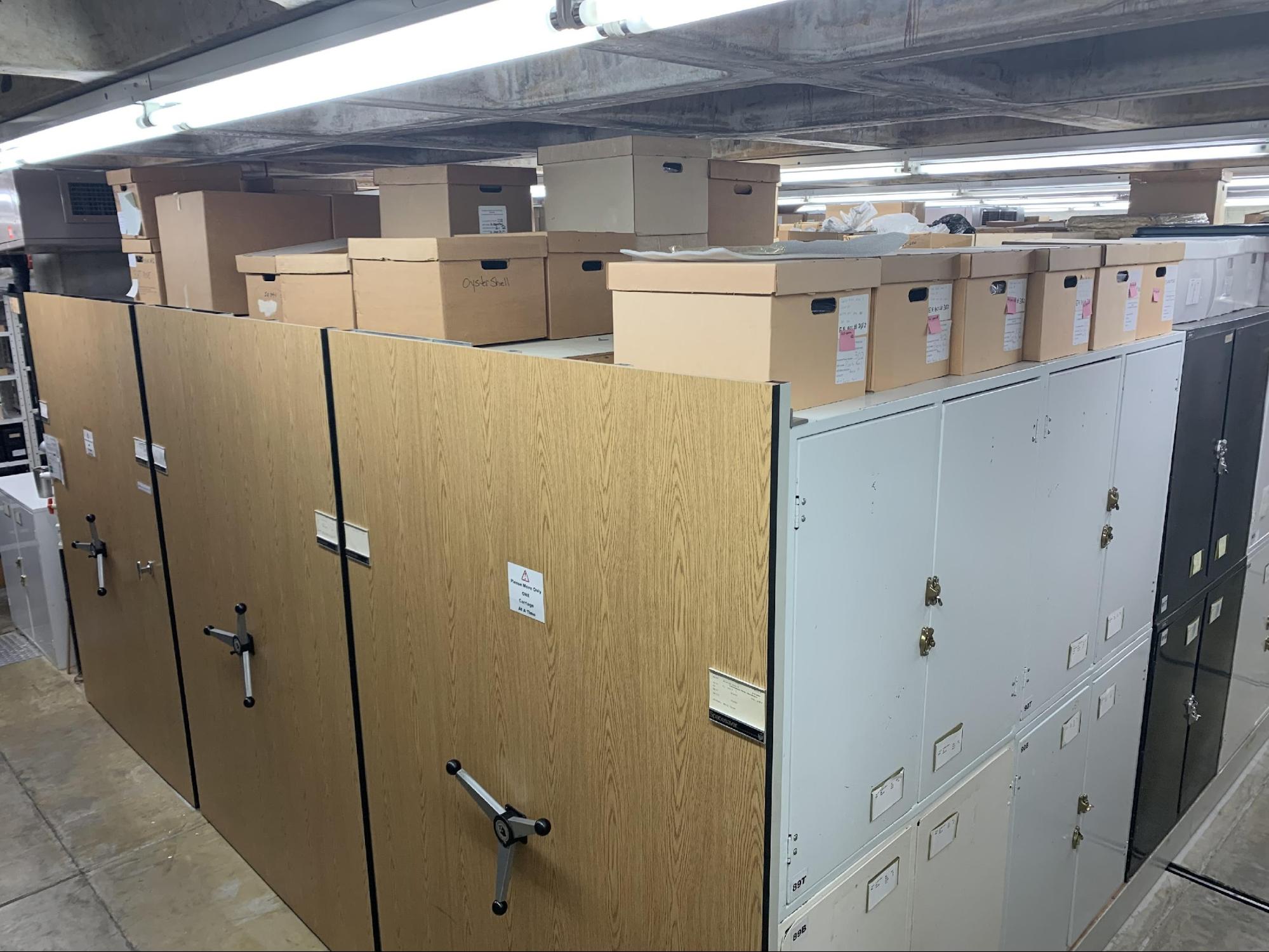
The data collected from the EAP specimens has informed us about the longer history of how environments have impacted people and how, in turn, people have impacted their environments. But surprisingly little of our data has been fully digitized, so although much has already been learned, by making our data available more broadly, we can learn even more valuable lessons relevant to today’s major issues by documenting the millennia of “human experiments” of the past – learning from past successes and mistakes.
Those of you who have been actively engaged with community science know this part of the story all too well – alongside the vast EAP collections are the MILLIONS of associated data records – as accession folders, card cabinets, and notebooks …


Over the years we have made great strides in scanning our primarily paper records into digital formats that can be more easily shared.

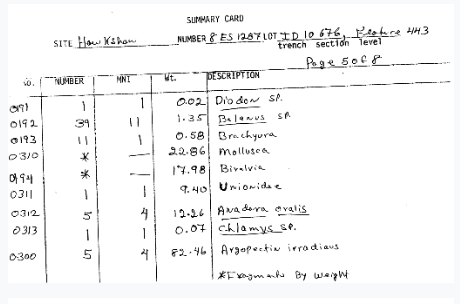
But even with digital versions, it is an archaeological project of its own to dig through these and organize, standardize, and make available the actual specimen-by-specimen data in these records.
This is where Notes from Nature has provided a wonderful opportunity to reach out to community scientists and volunteers to help us digitize the data from our scanned paper records. In collaboration with our lab team of students, researchers, and volunteers, and with the special assistance of a dedicated teen volunteer from a local high school (stay tuned to hear more from them in our next blog post), and of course with Mike Denslow of Notes from Nature, we have created a first expedition to digitize our most straight-forward data records, the Environmental Archaeology zooarchaeological specimen data summary cards! We started with zooarchaeology because it has historically been the primary focus of our collections and thus is the collection with the most standardized data recording methods and broadly accepted taxonomies in our archives. But don’t let this fool you – it will still be a challenge that we hope you’ll be excited to take on!
Today we launched ArchaeoZooArchive expeditions by geographic region, starting with South American collections! Once those have been completed we will move on to Central American and Caribbean expeditions.
Please give ArchaeoZooArchive: The South American Expedition
a try today and let us know what you think.
— Kitty F. Emery, Jessica Nickles King, Nicole Fuller, and Al Keller.
EAP logo by Al Keller. Other images by EAP.
Measuring bees for Climate Change: California Edition
We are excited to launch a new measurement expedition, Measuring bees for Climate Change: California Edition. This project brings together specimen images from six institutions across the US, featuring California bees from the past 100 years. These measurements will contribute to a new study aimed at answering the question: is climate change shrinking bees?
Recently, scientists have documented body size declines in animal groups over the past 50-100 years. For insects, the causes of this shrinking effect are strongly debated. One possibility is warming temperatures interfering with normal animal development. Climate change may also affect size by restricting food availability in some environments. Regardless of cause, changes in body size can have major ecological consequences. Smaller bees, for example, carry less pollen and may be more sensitive to environmental disturbances, restricting their ability to deliver critical pollination services.


California is home to approximately 1,600 bee species, thanks to its diverse range of habitats, which include deserts, forests, and grasslands. California’s climate is warming and becoming more unpredictable, with complex and unknown impacts on bees. Notes from Nature volunteers can help us understand body size changes in California’s bees by capturing critical measurement data on historical specimens . You’ll help us measure bee body width (or intertegular distance–essentially, shoulder width), which provides a good estimate of overall body size.
Thanks to existing Notes from Nature volunteer effort, we were able to show the value of citizen community science approaches to bee measurements. In a recent paper we found that Notes from Nature volunteers provide highly accurate bee body size measurements, differing only 2% from trained researchers (link to study). This study showed the enormous potential for community scientists to unlock the wealth of size data stored in museum records.

Our preliminary results hint at exciting potential links between bee size and climate–more measurements will help fill in some critical gaps that we haven’t been able to cover yet. We need help completing these measurements to expand our dataset to represent a greater diversity of bees over time and in different habitats. This data will help us answer questions like: are bees really shrinking? Are males and females shrinking at different rates? Do hotter regions cause greater shrinking? Which habitats are most vulnerable to these effects? Questions like this require a huge amount of data and have not yet been answered for bees at this scale. Community science measurements will help us overcome this data challenge and provide new insights into bee biology in a warming world.
Please visit Notes from Nature – Big Bee Bonanza! today to help us complete the Measuring bees for Climate Change: California Edition expedition.
 Notes from Nature