
Streak and a “fun” new expedition
Notes from Nature has seen a lot of activity since before WeDigBio Lite. In fact, we have had 11 straight days with over 5,000 transcriptions. That is an incredible amount of activity! Thanks to all the have contributed.
We have a “fun” new activity, assuming you like cooties that is. It’s called Countin’ Cooties and you can find it in the Terrestrial Parasite Trackers Project.
“Cooties” is a slang term for lice. This series of expeditions is focused on counting the cooties from wildlife. These parasitic insects infest mammals and birds around the world. Cooties are contagious, they spread by contact between hosts. We are all very aware of how contact between hosts leads to the transmission of parasites and pathogens right now. There are over 6,000 known species of lice, and 100s of unknown species and we are trying to figure out how many specimens of each species (known and unknown) are in our collection. Thank all of you that have been working on this project, for your persistent effort to spread the data collecting effort – this is definitely the best way to spread “cooties”!
— The Notes from Nature Team
Wow! You really did ‘hop to it’!
We completed our Gaudy Grasshopper expedition today! That’s 332 specimens in less than a week! Wow!
We’re making quick work of our 2nd expedition as well, the Short-horned Grasshoppers. Already at 75% complete! If you haven’t checked out this expedition and want to get in on it before its finished, it is part of the MI-Bug project here.
There has also been a lot of very helpful feedback on the project so far. Thank you for this and please keep letting us know what you think and how we can improve.
Thank you all and great job everyone!!
— Erika Tucker, UMMZ Insect Collection Manager & Assistant Research Scientist
Earth Day and WeDigBio Lite Appreciation
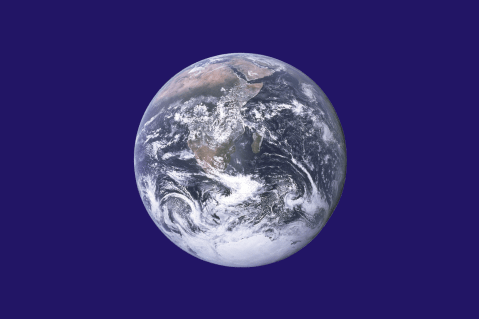
Happy Earth Day everyone! We hope you are well, and staying safe.
We are so very thankful and in awe of your contributions the last several days. WeDigBio Lite was a huge success! We logged over 30,000 transcriptions, hosted two well attended science talks, and met some new friends on Talk and social media. On top of that we continue to see lots of great activity on the site (> 5,000 transcriptions yesterday!). We want to express our appreciation to everyone who contributed.
On this 50th anniversary of Earth Day we want to honor the wonderful NfN community for partnering with us to conserve and make available knowledge about the natural world. The NfN project gives you the opportunity to make a scientifically important contribution towards that goal every single day.
Every transcription that is completed brings us closer to filling gaps in our knowledge of global biodiversity and our natural heritage.
Happy Earth Day to all.
– The Notes from Nature Team
WeDigBio Lite Day 4 Summary
Amazing! Notes from Nature received 9,815 classifications on day 4. This is our second biggest day ever. That brings the total to 30,640 for the event.
There are still many great expeditions to work on! Three are currently above 85% and could use some effort to help bring them to completion. Those are Field & Forest Plants Of Virginia II, Spring Trilliums, Lilies, And Irises – Spring Refresher and Calbug Leaf-Cutter Bees 17.
Thanks to all for making this another huge success.
— The Notes from Nature Team
WeDigBio Lite Day 3 Summary
Wow, another amazing day. Notes from Nature received 8,169 transcriptions on day 2. That is over 20,000 transcriptions in the last three days and we will have one more day to go for WeDigBio Lite.
We still have lot of great content for day 4. Many thanks to all that have participated!
— The Notes from Nature Team
Your Help Matters
We wanted to share this very important discovery that happen recently on Notes from Nature.
Your Help Matters: A Threatened Plant Discovery
A few quotes from the article:
Notes from Nature volunteers may not have known it at the time, but while they transcribed the label of this small and unassuming plant specimen, they were documenting a novel occurrence of a rare, threatened species.
By transcribing information from specimen labels, citizen scientists helped us rediscover this historical occurrence of the rare Phacelia mustelina. These data are critical for assessing the conservation status of this species; if we know where this plant grew historically, we can better know where it might likely still exist. Once we know where and how abundantly this species exists, we can determine whether it needs protection and how to effectively do so. If you ever wonder whether your help matters, remember the weasel phacelia. Bringing “dark data” to light can us help protect biodiversity on Earth.
WeDigBio Lite Day 2 Summary
WeDigBio Lite had another great day. NfN received 7,537 transcriptions on day 2. The shout out today goes to the New York Botanical Garden project that received 3,216 transcriptions yesterday.
As always we’d love to hear from you! Feel free to check in on NfN Talk with any thoughts or impressions you would like to share.
— The Notes from Nature Team
See no-see-ums Hawaii Expedition
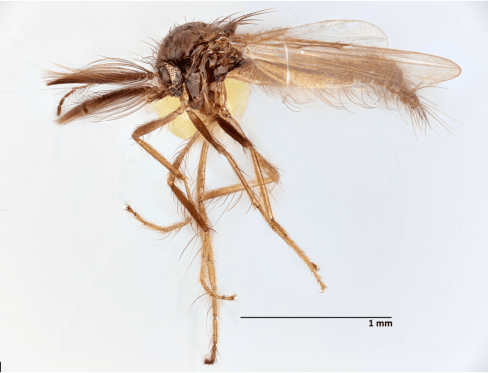
Calling all nature and science lovers. We need your help. If you enjoy learning about insects and museum collections, you can help researchers studying the biodiversity of parasites by transcribing specimens in the Bishop Museum Entomology Collection.
We are launching a new expedition to digitize our U.S. parasite collection starting with no-see-ums from Hawaii. No-see-ums or “punkies” are tiny midges usually less than 3 mm wingspan. They are barely bigger than nothing, but their painful bite feels like a burning piece of ash. Hawaii has 8 native species in two genera: Dasyhelea and Forcipomyia. One native species of Forcipomyia rarely bites humans and other animals, but adults of most native species feed on pollen and nectar and are important pollinators, including some crop plants like cacao.
Eight alien species have been introduced into Hawaii by human trade. One recently established species, Culicoides jamaicensis belongs to a group of important human and veterinary pests and may become problematic in Hawaii.
Because of their small size, these midges are usually glued on paper points mounted on insect pins. Specimens in the Hawaiian insect collection include hundreds of important historic pinned specimens. They represent an important reference collection documenting the biting midge fauna of Hawaii.
Your participation in this expedition will not only be helping the Bishop Museum but will be assisting a larger community involving 22 museums and institutions that are working together to digitizing over a million parasite specimens. The Terrestrial Parasite Tracker project goals are to synthesize thousands of important arthropod records so that the specimens, and their associated data, will be available to help understand and predict the spread of human and wildlife disease.
Please join our virtual ohana of citizen scientists and help unlock valuable information about the diversity and distribution of these parasites making these data available to scientists across many disciplines.
You can find the new See no-see-ums Hawaii expedition in the Terrestrial Parasite Tracker Project.
— Jim Boone, Bishop Museum, Honolulu, Hawai‘i
WeDigBio Lite Day 1 Summary
WeDigBio Lite got off to an amazing start! NfN received 5,119 transcriptions on day 1. We’d love to hear about everyone’s experiences participating online. Feel free to check in on NfN Talk with any thoughts or impressions you would like to share.
We’d also like to send a special shout out to the volunteers and project team from Notes from Nature – Plants of Arkansas. That project contributed 1,540 transcriptions, which is 30% of yesterday’s total.
We are so grateful to each and every person who participated no matter which project or how many transcriptions you completed!
— The Notes from Nature Team
NYBG Globe Spotter

Every year, tens of thousands of new botanical collections make their way into the William and Lynda Steere Herbarium from every corner of the globe. Often arriving pressed between sheets of newspaper from their country of origin, these precious biological samples document everything from enormous rainforest trees to tiny wildflowers. When made accessible quickly to researchers online, these incoming collections represent a vital flow of new information about the state of the world’s plants and fungi.
Through our latest virtual expedition series, “NYBG Globe Spotter”, Notes from Nature participants can help rapidly connect scientists to biodiversity collections worldwide which are relevant to their field of interest. If you’ve participated before in our US State Spotter projects, you will recognize this streamlined workflow focusing on each subject’s geographic origin. In these new series of expeditions, you will travel virtually to nearly every continent on the planet as you search specimen labels for clues to identify the COUNTRY (or US State) where each organism was collected from its environment.
In response to mounting global crises, from public health to biodiversity loss, it is more important than ever to understand the multitude of connections that hold our living Earth together. Fortunately, by helping to uncover the latest botanical observations from around the world, you can directly support scientific research to investigate these planetary threads.
To get started, follow the link to our latest “NYBG Globe Spotter” expedition on the Notes from Nature-NYBG project page.
— Charles Zimmerman, New York Botanical Garden, William and Lynda Steere Herbarium
Zooniverse username: @czimmerman

