
WeDigBio – One week from today
We wanted to remind you that WeDigBio starts in one week on October 10th and continues through October 13. WeDigBio or Worldwide Engagement for Digitizing Biocollections, is a global data campaign, virtual science festival, and local outreach opportunity, all rolled into one. The annual, 4-day WeDigBio events mobilize participants to create digital data about biodiversity specimens. You can learn more at https://wedigbio.org/

Notes from Nature will be hosting lots of expeditions that you can work on from anywhere. Just head over to Notes from Nature select a project of interest and then choose one of the expeditions to work on. Every record you enter makes a huge difference!
Lastly, please see out previous post about a special WeDigBio symposium being held on October 10th at 2pm central
Thanks,
The Notes from Nature Team
WeDigBio Symposium: How is AI Being Used in Biodiversity Efforts?

How is AI Being Used in Biodiversity Efforts?
The WeDigBio board is pleased to announce a one-hour symposium, “How is AI Being Used in Biodiversity Efforts? on October 10 from 2-3pm Central Time (3-4pm Eastern Time). This session will include three different examples of how AI can be used in service of digitization and conservation efforts, and how its use is being monitored. As the presence of AI in all walks of life becomes more common, the use of AI (both the why and the how) is not always clear. In this session, three researchers will share how they use AI in their work, why it is useful for them, and the methods they have in place to ensure data quality.
Schedule
2:00–2:05 Welcome! by Samantha Blickhan (Zooniverse)
2:05–2:20 The evolution of AI as a tool for conservation, by Sarah Huebner (Smithsonian National Zoo and Conservation Biology Institute)
2:20–2:35 Phenobase: a central global database of plant phenology by integrating in situ observatory and image-derived phenology data, by Daijiang Li (University of Arizona)
2:35–2:50 Leveraging ground truth Smithsonian data to evaluate AI tools (Smithsonian OCIO Data Science Lab and Office of Digital Transformation)
2:50–3:00 Panel Discussion
The 4-day WeDigBio event runs from October 10-13. WeDigBio stands for Worldwide Engagement for Digitizing Biocollections. To learn more about WeDigBio, visit wedigbio.org.
Register to get a Zoom link: https://www.eventbrite.com/e/how-is-ai-being-used-in-biodiversity-efforts-tickets-1033701638427
Save the date(s)! WeDigBio – October 10-13, 2024
We are looking forward to the next WeDigBio, which is less than 3 weeks away! The event takes place April 18-21, 2024. There is still time to get involved, so please reach out if you are interested or have any questions at all about the event.
If you are interested in hosting an event, please check out https://wedigbio.org/content/register-event-tour-or-campaign.
The WeDigBio symposium for this event will focus on Artificial Intelligence. More details to come soon.
Looking forward to it,
The Notes from Nature Team
Plants of the Mojave, Colorado and Great Basin deserts
California’s deserts are far from wastelands, but bursting with biodiversity and plant life. Each of California’s desert habitats, the Mojave, Colorado and Great Basin deserts each have their own distinct landscapes and ecology. The Mojave is a high desert with winter snowfall and low overall rainfall, while in contrast the colorado desert is a low desert with monsoon-like seasonal rains. The Great Basin desert begins in the shadow of the Sierra Nevada Mountains in California and spans across much of Nevada and Utah. The great basin has even higher altitude conditions than the mojave and is subdivided by several ranges of mountains. Each of the desert habitats is home to thousands of plant species with hundreds of unique species that are endemic to California. While this expedition will only contain a selection of the wide breadth of flowering desert plants native in California, we hope you enjoy it and learn something new.
Please give it a try https://bit.ly/4cBICKK!
Here is a highlight of some interesting desert-dwelling plant species that you can find in this expedition:
Eramalche Rotundifolia also known as the desert five spot is native to the Mojave , Colorado and Great Basin deserts of California and neighboring states. It is a special sight in Death Valley National Park or Anza Borrego Desert State Park during the spring blooms.

Chylismia Munzii or the Death Valley Suncup is native to California and Nevada, and can also be found in its name-sake national park Death Valley. Chylismia Munzii is in Onagraceae or the evening primrose family.

Larrea tridentata commonly known as the creosote bush or La Gobernadora in Mexico, is widespread across the Mojave, Colorado in the United States and the Chihuahuan desert in Mexico. This hardy plant can go up to two years without water. Larrea tridentata has a long lifespan and the interesting ability to clone itself asexually. Single individuals can be found to live up to 500 years with clonal colonies ( colonies of genetically identical clones from a single ancestor) able to live up to 11,000 years. You can read more about Larrea tridentata at nps.gov here.

Plants of the Mojave, Colorado and Great Basin deserts: https://bit.ly/4cBICKK!
Introducing: The Big Dragonfly Color Project
Have you ever wondered why bugs are the colors they are? From the bright hues of butterflies to the earthy tones of ants, these natural colors serve many important roles. These roles include attracting mates, warding off predators, and staying warm.

In dragonflies, a 300-million-year-old group intimately connected to freshwater ecosystems on Earth, the uses of their vibrant body colors are almost entirely unknown. This is because of an unfortunate problem – color fade. We would normally turn to specimens in museum collections for data on the colors of species, but because their pigments naturally degrade over time their vivid colors disappear in weeks to months.
For this reason we turn to iNaturalist, a citizen science platform where users upload photo observations of organisms. Since it contains photos of live organisms, color fade is no issue. But it also presents many challenges because of how incredibly variable these images can be. Think of all the different viewing angles, lighting conditions, and cameras that many thousands of observers use across the 2 million dragonfly images on iNaturalist. All of these affect the color we see.
We have developed an approach that uses computer vision and AI to deal with these issues. We are able to pull the dragonfly out of each image, filter bad or weird ones out, then discover what colors are present. This data will allow us to finally answer questions about the colors of the 2000 dragonfly species on iNaturalist globally. For example we think that dark body colors might be used to help warm dragonflies in cold environments, and that vibrant patterns are used for species recognition during mating.

An essential part of trying a new method in science is you make sure it works. Our approach to getting color data is really complex and novel, and we want to compare it to the common standard of having human observers code colors – and for that we need your help! If the colors you choose for an image match up to what our computational approach detects for that same image, we’re golden. Otherwise, I have more work to do!
Thanks for considering joining the Big Dragonfly Color team!
Link to our expedition:
https://www.zooniverse.org/projects/md68135/notes-from-nature-labs
Be sure to choose “Big Dragonfly Color” on the right side of the page!
New Project Alert! CAS Plants to Pixels

The Notes from Nature team is thrilled to announce the launch of a new project called CAS Plants to Pixels! We currently have two live expeditions and a demo that shows off some of the capabilities that we’ll be using for the project in the future. Please give them a try and let us know what you think.
The main goal of this project is to digitize California collected herbarium specimens housed at the California Academy of Sciences. You can learn more about the exciting high throughput method being used for imaging and the resulting research involved in this project on the project Research page.
We’ve got a lot more to share in the coming weeks and months. You can get involved now by give the project a try — visit: https://www.zooniverse.org/projects/md68135/notes-from-nature-cas-plants-to-pixels
Happy Earth Day, Happy Anniversary to us and Thank You!
Happy Earth Day. This is a very special day at Notes from Nature as it’s our 11th anniversary! We first launched Notes from Nature on Earth Day 2013 and we are beyond grateful to still be here today.

We are so thankful for all the support of our colleagues, the National Science Foundation and most of all our volunteers! Whether you stopped by once or have been with us for years, we literally won’t be here without you and your support. Thank you.
We just wrapped another amazing WeDigBio. Notes from Nature received over 14,000 classifications during the event. Thank you to all the event organizers, symposium and presenters. Note that the next WeDigBio event is scheduled for October 10 – 13 2024.
As always there is more work to be done, so please stop by Notes from Nature when you can and help us spread the word.
– The Notes from Nature Team
WeDigBio – April 18-21 2024
We are looking forward to the next WeDigBio, which is less than 2 weeks away! The event takes place April 18-21, 2024. There is still time to get involved, so please reach out if you are interested or have any questions at all about the event.
The WeDigBio symposium for this event will focus on youth, young professionals and their inspirational career paths into science and in particular experience with natural history collections. More details to come soon.
Looking forward to it,
The Notes from Nature Team
Terrestrial Parasite Tracker – Price Collection of Parasite Research
If you’re watching wildlife from your kitchen window, you are witnessing several levels of biodiversity that cannot be seen through binoculars. Birds and mammals are hosts to many parasites that live amongst their fur and feathers—lice, fleas, flies, ticks and mites. Yet scientists are just scratching the surface of the world of parasites. Millions of specimens are sitting in museums all over the world, but a lack of digital records make them hard to find and study.
Thanks to Terrestrial Parasite Tracker volunteers at Notes from Nature, thousands of these specimens are now available to everyone. Transcription of microscope slides of lice and fleas from the Price Collection of Parasite Research at the University of Utah began at the beginning of the pandemic, and finished this month. Over 22,000 slides that have been digitized, representing specimens from over 80 countries. Throughout these digital expeditions, volunteers have pointed unique specimens that caught their interests – here are a few:
A louse from Fordlandia, which at the time the louse was collected was a rubber plantation in Brazil run by the Ford Motor company (https://www.gbif.org/occurrence/2632420706).
One of the oldest specimens in the collection is a louse from an Oriental Pied Hornbill. The Hornbill was added to the collection of the American Museum of Natural History in 1884. This bird specimen was later examined by Dr. Elbel for ectoparasites, which is when these lice were found and preserved (https://www.gbif.org/occurrence/3030073403).
The digitization of these collections also allows us to see the impact of world events on parasite discovery. Perhaps not surprisingly, very few parasites were added to this collection during World War II. Notably, however, the flea (https://www.gbif.org/occurrence/3806588529) was collected in Okinawa, Japan in April of 1945, and many of the species in the collection were identified by or described by K.C. Emerson, who was in the US military and survived the Bataan Death March as a prisoner of war in the Philippines. Types of some of the lice he described later in his life are in the PIPR collection (https://www.gbif.org/occurrence/2632420789).
It’s not all old news. There are still many undescribed species in the collection. In fact, if you watched a House Finch before the year 2019, you were probably also watching a species unknown to science (https://www.gbif.org/occurrence/3030072533). This new species Brueelia thorini (along with new species on Purple Finches, American Goldfinches, and Evening Grosbeaks) were described in my lab from specimens in this collection.
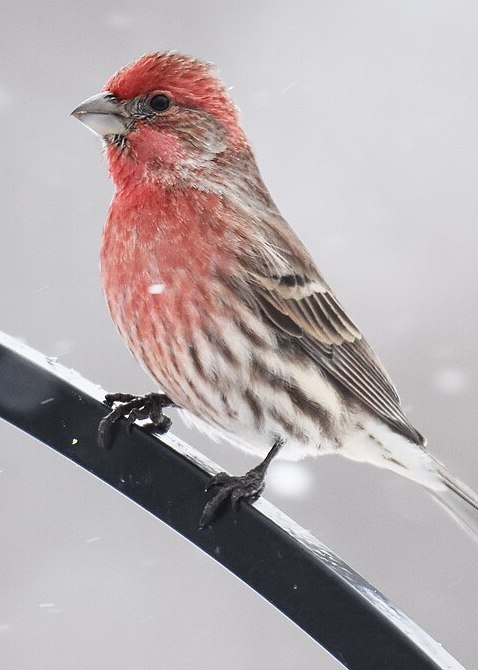
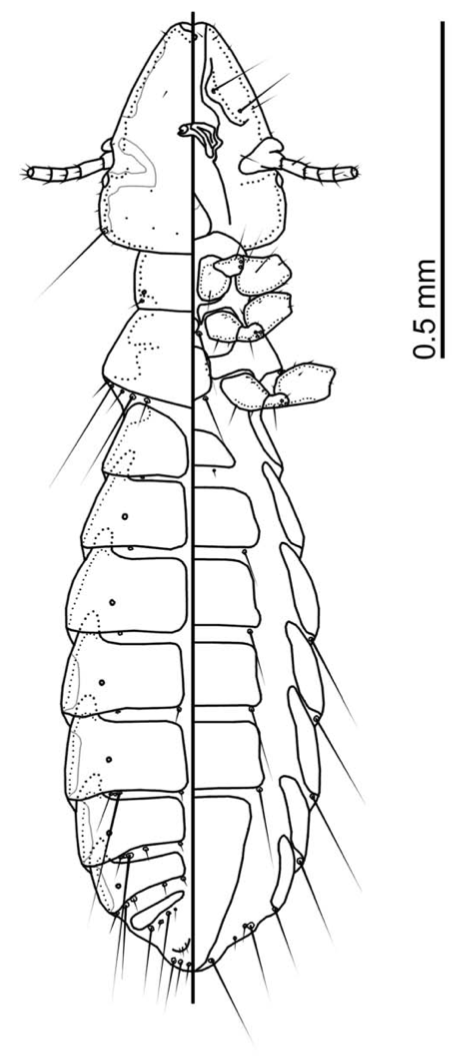
Right: House Finch (Wikimedia Commons: lwolfartist), Left: Line drawing of Brueelia thorini (drawing by Daniel Gustafsson)
Thank you all for contributing to this project to understand the diversity of parasites old and new, from the far corners of the earth and from our very own back-yards. We could not have done this without you!
— Sarah E. Bush, Ph.D.
Price Collection of Parasite Research, University of Utah
Lichen Tales, Bryophyte Trails: The Next Chapter Awaits!
Hello friends!
We’re thrilled to announce that you diligent Notes from Nature – Capture the Collections transcribers have created a beeyoootiful, complete dataset for our holdings of lichens from the Hudson Bay Lowlands! It’s currently being prepared for upload to data repositories online, and we’ll share the link as soon as we can.
In the meantime, we have been using the coordinates you all have transcribed from the specimen labels to start a lichen collection map (Figure 1) of the Hudson Bay Lowlands (HBL). This map showcases a group of 2,253 lichen specimens from the Hudson Bay Lowlands. These specimens had their label coordinates transcribed by fantastic Zooniverse volunteers or by past efforts. And, this is less than half of the records that will be mapped in total: the collectors of almost 3000 HBL lichen specimens in the National Herbarium of Canada did not record coordinates on their labels, which means that coordinates must be determined from the descriptive locality information those collectors *did* record. We’re gearing up to start this georeferencing step real soon!

The Plant Places workflow – for locality information from vascular plant specimens – is over 50% complete! Together with data from other sources, including herbarium holdings and field work, all these mapped occurrence records for plants and lichens will help identify, geographically, areas of biodiversity significance and knowledge gaps. Thank you to everyone who has helped so far!
Breaking News!
We have three new workflows on the horizon. Thanks to tremendous effort by excellent student staff, 3712 moss and liverwort specimens will soon be ready to upload for transcription. These new workflows – Whodunit?: Bryophyte collectors, Home Sweet Habitats: Bryophytes, and Moss Mapping – will be like previous workflows for Vascular plants and lichens, with slight tweaks to improve task descriptions and make them easier to do overall. We hope you enjoy them!
Once again, thank you immensely for your time. Every transcription helps the herbarium to become a better resource for understanding this unique region of Canada. Please explore our new Bryophyte workflows launching January 15, 2024.
Your friends,
Kim, Lyn and Jennifer
https://www.zooniverse.org/projects/cmnbotany/notes-from-nature-capture-the-collections
Bonjour les amis !
Nous sommes ravis d’annoncer que vous, l’équipe de transcription assidue de Notes de la nature – Capturer les collections, avez créé un ensemble de données complet et ma-gni-fi-que pour nos collections de lichens des basses-terres de la baie d’Hudson ! Celui-ci est présentement en préparation pour se faire télécharger dans des dépôts de données en ligne. Nous partagerons le lien dès que possible.
Entre-temps, nous avons utilisé les coordonnées que vous avez toutes transcrites à partir des étiquettes des spécimens pour créer une carte de la collection de lichens (figure 1) des basses-terres de la baie d’Hudson (BTBH). Cette carte présente un groupe de 2 253 spécimens de lichens des basses terres de la baie d’Hudson. Les coordonnées des étiquettes de ces spécimens ont été transcrites par de fantastiques bénévoles de Zooniverse ou par des efforts antérieurs. Il s’agit de moins de la moitié des spécimens qui seront cartographiés au total : les collectionneurs de près de 3 000 spécimens de lichen des HBL conservés à l’Herbier national du Canada n’ont pas inscrit de coordonnées sur leurs étiquettes, ce qui signifie que les coordonnées doivent être déterminées à partir des informations descriptives sur la localité que ces collectionneurs ont *inscrites*. Nous nous préparons à commencer cette étape de géoréférencement très bientôt !
Figure 1. Cette image montre les points de collecte de nos spécimens de lichens. Elle met en évidence les zones de collecte actives et celles pour lesquelles les données manquent. Elle indique également les coordonnées qui doivent être vérifiées, comme le point situé dans les eaux de la baie d’Hudson.
Le flux de travail Localités de plantes vasculaires – pour les informations sur les localités à partir de spécimens de plantes vasculaires – est achevé à plus de 50 % ! Avec les données provenant d’autres sources, y compris les fonds d’herbiers et les travaux de terrain, toutes ces données cartographiées sur les plantes et les lichens permettront d’identifier géographiquement les zones importantes pour la biodiversité et les lacunes en matière de connaissances. Merci à tous ceux qui nous ont aidés jusqu’à présent !
Nouvelles en primeur !
Trois nouveaux flux de travail se profilent à l’horizon. Grâce aux efforts considérables de stagiaires aux études, 3 712 spécimens de mousses et d’hépatiques seront bientôt prêts à être téléchargés à des fins de transcription. Ces nouveaux flux de travail – Whodunit? : Les collecteurs de bryophytes; Bien dans son habitat ! : Bryophytes; ainsi que Cartographie des mousses – seront semblables aux flux de travail précédents portant sur les plantes vasculaires et les lichens, moyennant de légères modifications pour améliorer les descriptions des tâches afin de faciliter leur exécution en général. Nous espérons que vous les apprécierez !
Une fois de plus, nous vous remercions pour le temps que vous nous avez consacré. Chaque transcription aide l’herbier à devenir une meilleure ressource pour comprendre cette région unique du Canada. Nous vous invitons à découvrir nos nouveaux flux de travail sur les bryophytes qui seront lancés le 15 janvier 2024.
Vos amis,
Kim, Lyn and Jennifer
https://www.zooniverse.org/projects/cmnbotany/notes-from-nature-capture-the-collections?language=fr
 Notes from Nature