
Moths III complete
Thank you citizen scientists for helping complete the third expedition digitizing over 1000 images of the spectacular underwing moths! During this expedition you saw numerous specimens from Louisiana that were collected over the last 60 years. With this information, researchers can begin to examine their distribution changes, changes in flight times, changes in host plants, and impact of climate change during the last century.
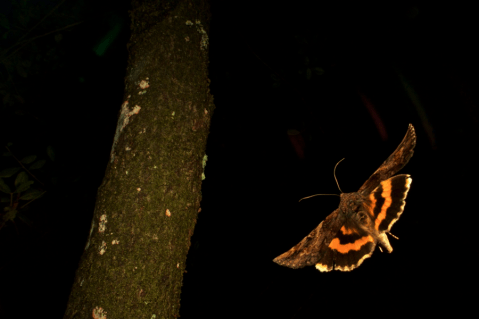
Photo by Lary Reeves
Be on the lookout for one more expedition of underwing moths. After that, we will be switching to a new type of moth, and will begin posting photos of new moth species for future expeditions. Maybe you will notice the differences!
Stacey L. Huber
McGuire Center for Lepidoptera & Biodiversity, Florida Museum of Natural History
Cambrian fossils (aka loads of trilobites!) from western North America
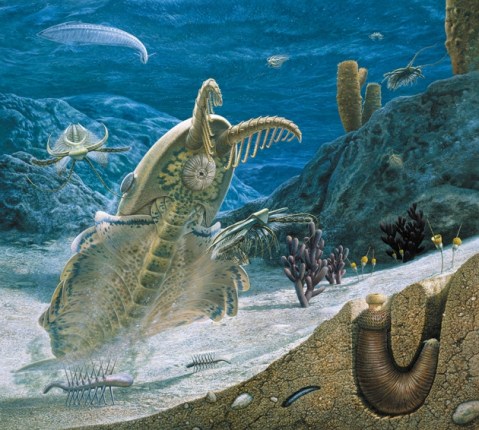
Image: John Sibbick, Natural History Museum, London.
The Cambrian period was a time of some really bizarre looking critters and so many originated at this time (about 540 million years ago) that it is often referred to as the “Cambrian Explosion.” This period of the evolution of life saw some really bizarre body plans that transformed a simple environment dominated by cyanobacterial reefs and microbes into one of very highly ornamented and unusual critters. Douglas Fox describes this landscape of rapidly changing animals in his 2016 Nature article and gives us a good overview of the role that ocean water oxygen levels played in allowing for more complex life forms to develop and flourish.
Trilobites are a very common fossil to be found throughout the Paleozoic, but the Cambrian was where they dominated the seas that covered most of North America for many millions of years. Trilobites are arthropods and frequently molt their exoskeletons in order to grow. Most fossil remains of trilobites that we have today are fossilized exuviae, or the cast off exoskeletons instead of the actual animal itself, as the external shell is discarded to allow for the animal to grow.
Trilobites are an exceptional component of the history of life on our planet; indeed, they are among the most successful animals in the history of our planet. Join us for this second expedition to transcribe labels from Cambrian fossils of western North America. Our last expedition focused on plastotypes (plaster molds of type specimens from around the world) and these fossils here are the real deal. Many of these fossils are trilobites, but keep an eye out for our own Anomalocaris and other bizarre Cambrian fossils!
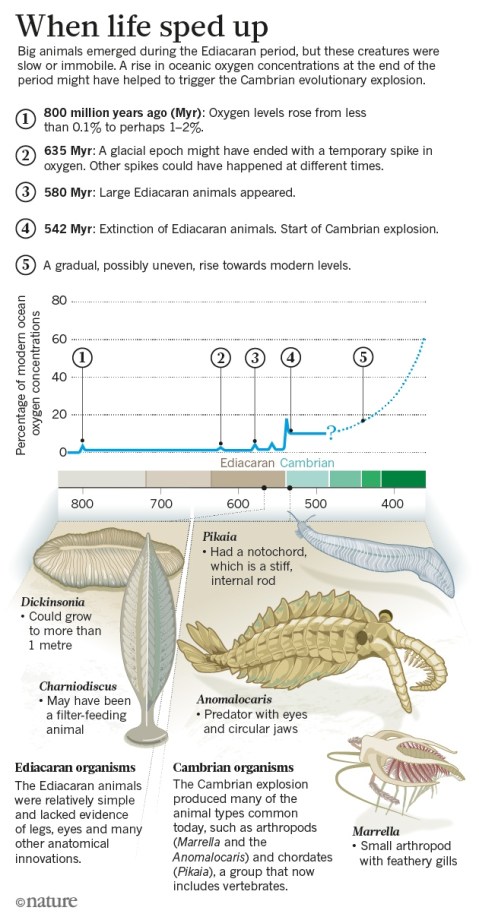
Copyright Nature Publishing Group, used with permission.
WeDigFLPlants Focuses on Spring in Florida’s Forests
Austin Mast, Florida State University

Unlocking Northeastern Forests: Complete!

Rhododendron arborescens (Pursh) Torr. / “sweet azalea”
Congratulations NfN volunteers for completing the New York Botanical Garden’s first expedition targeting vascular plants of New England!! Through your heroic efforts to catalogue over 2,300 specimens, scientists everywhere will soon have access to our complete historic collection of 300 different species of Oaks (Fagaceae), Blueberries & Rhododendrons (Ericaceae) found throughout the Northeastern US. That is no small feat, and you all deserve a tremendous round of applause!!
Or, more appropriately … *VIGOROUS RUSTLING OF LEAVES*
Fortunately, this fantastic success is only the beginning. NYBG staff and volunteers have prepared and photographed many more preserved specimens of other New England plants, which are now in need of examination by citizen scientists! Look out for the next phase of our project, Unlocking Northeastern Forests: Nature’s Laboratories of Global Change (Part II), and share in helping to advance our collective understanding of local, natural ecosystems–their historic baselines, and progressive shifts over time.
— Charles Zimmerman, New York Botanical Garden
Visionary Violets
Spring ephemerals are nature’s reward for surviving winter. These springtime sweeties emerge during the transition from winter to spring. They are an indicator that spring is (finally) on its way. Spring ephemeral plants thrive under unusual conditions. They only have access to sunlight for a brief period of time – they get shaded out by tree leaves once spring is in full swing. The Southeastern United States is home to several species of spring ephemerals. Help us show appreciation for these phenomenal plants while supplementing our database of herbarium specimens.
In an effort to transcribe our spring ephemerals, we wanted to start with a beloved spring star. Violets are a staple spring ephemeral plant. Violets are edible, medicinal, and beautiful – what’s not to love? Their emerald green leaves bring color back to the landscape. Violet flowers – although commonly purple – can be other colors as well! Despite the fickle spring transition we’re having in the Southeast, we’re trying to stay inspired and excited for warmer weather! Remind yourself the winter will eventually end by helping us transcribe these valiant violets!
— Alexandra Touloupas, North Carolina State University
New 5000 badge!

We have recently added a new herbarium badge. This brings our count of herbarium badges to 7. The new “mature grove” badge is earned after completing 5,000 transcriptions on herbarium expeditions. There is something special about this particular badge. It was created by our own longtime Notes from Nature volunteer Mr. Kevvy!
Thanks to Mr. Kevvy for the contribution and congratulations for reaching this milestone!
Another Swallowtail Butterfly Expedition!
It’s about time—the New World Swallowtail Butterfly project has another expedition up. This is the last batch of McGuire Center specimen images I am collecting for a study on the relationships between morphological variation and geography. This collection provides an excellent record of morphological variation across the distributions of these species.
You may also come across some specimens that look different from the other McGuire Center specimens—their backgrounds are white foam with a white ruler for scale. These images were generously provided from the private collections of dedicated amateur lepidopterists. The specimens come from a hybrid zone between two species—Papilio canadensis, Canadian tiger swallowtail, and Papilio glaucus, Eastern tiger swallowtail. We are interested in understanding whether the hybrid species looks more or less like one of its parent species, an amalgamation of the two, or if it has begun to display morphological characteristics that are completely unique.
As with the previous Swallowtail expedition, remember that there are two images for each specimen—a front and a back. This is important, because in some cases, the labels in the image have different data written on each side. Thanks for your help, and look closely—some of these specimens provide a unique historical record of biodiversity that has since been lost!
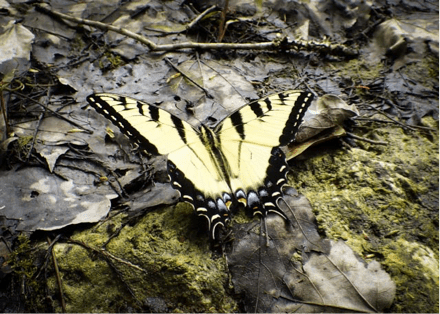
Photo: Hannah Owens
Check back when the expedition is complete—we’ll have some exciting preliminary data for you!
Hannah Owens, Post-doctoral Fellow, University of Florida
Fungus Among Us
Fungus Among Us considers the 19th-Century fungi collected in South Carolina by Henry William Ravenel
It’s not ‘your-celia’, it’s mycelia. Fungus Among Us asks volunteers to consider the myriad of mycelia that invade the earth, leaves, tree-bark and other substrates in their backyards. That’s exactly what Henry William Ravenel did back in the late 1840’s – except his backyard was either the malarial swamps of the lower Santee River or the diverse set of habitats found in and around Aiken, South Carolina. His exhaustive work culminated in the publication of the Fungi Caroliniani Exsiccati published between 1852-1856. The work consisted of five bound volumes called ‘Centuries’. Each Century contains 100 specimens of dried fungi that were painstakingly glued to the pages along with a descriptive label. In all, 30 copies of the five Centuries were produced for a grand total of 15,000 individual specimens that were carefully selected by Ravenel. Recognizing that his work was the first major effort to document the Fungi of North America since Lewis David von Schweinitz (1780-1834), Ravenel sent a copy to the Smithsonian Institution. Later that copy formed the nucleus of what is now the National Fungus Collection. The specimens presented here are from a copy that Ravenel presented to his Alma Mater – South Carolina College (now the University of South Carolina).
We encourage professionals, students, and citizen scientists from a variety of backgrounds (history, botany, mycology, etc.) to explore the world of 19th-Century Mycology and to help us by entering the label data visible on the image for each specimen. There is an interesting twist to this new expedition. Ravenel write his habitat information in latin. We don’t expect you to translate this text into to english, but some might find it interesting to research the meanings. Have FUN transcribing for . Among Us! Your hard work will eventually be displayed on the Mycology Collections data Portal, and will help update the entry for the Fungi Caroliniani Exsiccati.
To learn more about Henry William Ravenel and his contributions to science during the 19th Century please visit Plants & Planter.
Carabid beetle genome #seqthebeetle
This seemed fitting given our current bombardier beetle expedition. In addition, our very own CalBug data provider and NfN founder member Kip Will is a principal investigator on the project.

Help get a genome for the amazing Bombardier beetle #seqthebeetle
Vote daily from now until 5 April here https://tinyurl.com/gn84mu8
Leafcutter bees: building the perfect home
Many people have heard of leafcutter ants carrying bits of leaves around the forest like little parasols. Ants are all in the family Formicidae, in the order Hymenoptera, which includes bees, wasps, and ants. Leafcutter ants do not eat the leaves, but rather compost them to feed their fungus gardens. They only eat a particular species of fungus, removing all other species, and constantly tend their gardens to keep them clean.

Photo: Peter Oboyski
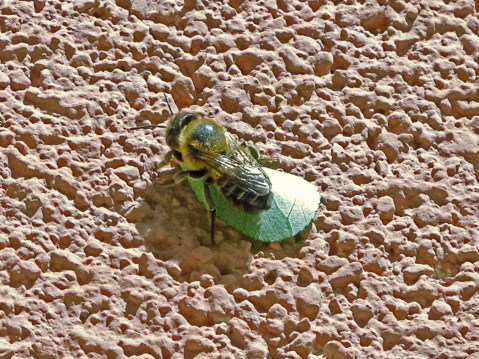
Photo: jacinta lluch valero https://flic.kr/p/ne1WHh
 Notes from Nature