
Moths III complete
Thank you citizen scientists for helping complete the third expedition digitizing over 1000 images of the spectacular underwing moths! During this expedition you saw numerous specimens from Louisiana that were collected over the last 60 years. With this information, researchers can begin to examine their distribution changes, changes in flight times, changes in host plants, and impact of climate change during the last century.
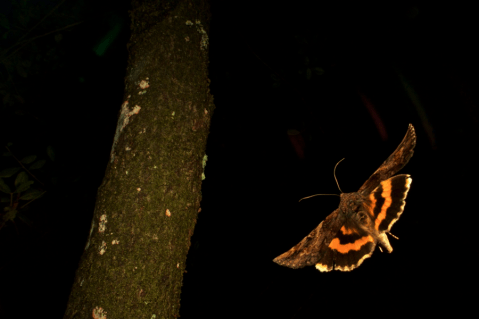
Photo by Lary Reeves
Be on the lookout for one more expedition of underwing moths. After that, we will be switching to a new type of moth, and will begin posting photos of new moth species for future expeditions. Maybe you will notice the differences!
Stacey L. Huber
McGuire Center for Lepidoptera & Biodiversity, Florida Museum of Natural History
Thanks for talking
We’ve mentioned recently that we’ve been thrilled to see more effort on Notes from Nature in terms of transcriptions. We also wanted to mention that there has been an equally strong uptick on the talk channels. We want to encourage everyone to talk about the objects, connect with like minded folks, etc. We really appreciate the feedback. As extra encouragement, we are now offering two new badges, the “Communicator” badge, for posting one item on “talk” of any sort, and the “Socializer” badge, for 25 posts. Rather than spoil the fun, we are going to keep the badges a surprise for now, but encourage you to get those badges!
Cambrian fossils (aka loads of trilobites!) from western North America
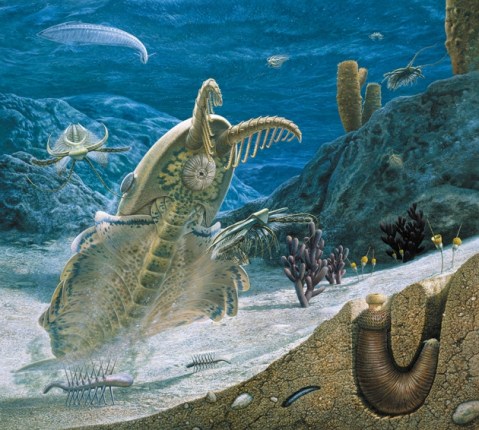
Image: John Sibbick, Natural History Museum, London.
The Cambrian period was a time of some really bizarre looking critters and so many originated at this time (about 540 million years ago) that it is often referred to as the “Cambrian Explosion.” This period of the evolution of life saw some really bizarre body plans that transformed a simple environment dominated by cyanobacterial reefs and microbes into one of very highly ornamented and unusual critters. Douglas Fox describes this landscape of rapidly changing animals in his 2016 Nature article and gives us a good overview of the role that ocean water oxygen levels played in allowing for more complex life forms to develop and flourish.
Trilobites are a very common fossil to be found throughout the Paleozoic, but the Cambrian was where they dominated the seas that covered most of North America for many millions of years. Trilobites are arthropods and frequently molt their exoskeletons in order to grow. Most fossil remains of trilobites that we have today are fossilized exuviae, or the cast off exoskeletons instead of the actual animal itself, as the external shell is discarded to allow for the animal to grow.
Trilobites are an exceptional component of the history of life on our planet; indeed, they are among the most successful animals in the history of our planet. Join us for this second expedition to transcribe labels from Cambrian fossils of western North America. Our last expedition focused on plastotypes (plaster molds of type specimens from around the world) and these fossils here are the real deal. Many of these fossils are trilobites, but keep an eye out for our own Anomalocaris and other bizarre Cambrian fossils!
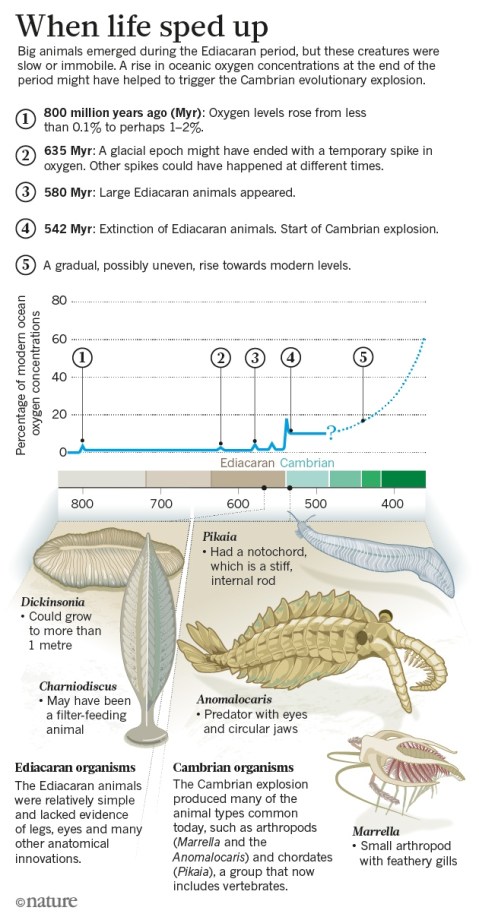
Copyright Nature Publishing Group, used with permission.
Why all the swallowtail butterflies?
You may have noticed that there have been a few different expeditions in the past few months focused on swallowtail butterflies. These specimens will be used for a larger project where we are planning to quantitatively look at the variation in wing morphology across and within swallowtail butterfly species. We have amassed approximately 1300 photos of swallowtail specimens from various museum and personal collections with the intention of having at least 10 males and 10 females from every Papilio species. Using morphometric analyses of landmarks on the dorsal and ventral wings, we will test the wing shape variation across species to see if there are correlations with sex, tropicality, geographic range size, and the number of congeners in the species’ range.
What do we mean by “landmarking”? This is an approach called “geometric morphometrics” where we select the same locations on a butterfly image in each image, and then we use some really neat tools that can find the best “fit” to a common “consensus”. For this project, we are using where veins in the butterfly wings meet the edge as our landmarks. Figure 1 shows an example of the ventral wing landmarks using this fitting method. The big black dots are the “consensus” landmarks and the variation around them in shown in the smaller grey ones. You can clearly see that some parts of the wing are much more variable than others. We know the orientation of the image below is a bit odd, but the variable landmark that is at the low point on the y-axis is near where the wing attaches to the body.
Now that all of the Notes from Nature swallowtail expeditions are complete, we will be working all summer to landmark these specimens and add more to our sample size for future analyses. If you are interested in the further ways we analyze morphological variation, give a holler and we can go into further detail. We will send along another update on this work later in summer, and thank you for helping us move forward with this research!
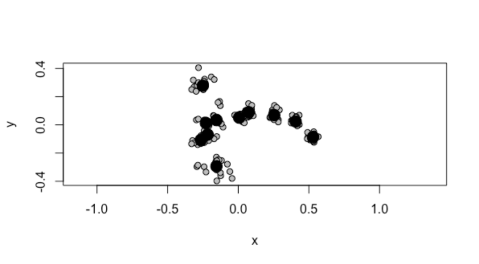
Figure 1. Plot for the x/y coordinates of the ventral wing landmarks for 27 Papilio specimens so far.
blog post by Laura Brenskelle
WeDigFLPlants Focuses on Spring in Florida’s Forests
Austin Mast, Florida State University

Unlocking Northeastern Forests: Complete!

Rhododendron arborescens (Pursh) Torr. / “sweet azalea”
Congratulations NfN volunteers for completing the New York Botanical Garden’s first expedition targeting vascular plants of New England!! Through your heroic efforts to catalogue over 2,300 specimens, scientists everywhere will soon have access to our complete historic collection of 300 different species of Oaks (Fagaceae), Blueberries & Rhododendrons (Ericaceae) found throughout the Northeastern US. That is no small feat, and you all deserve a tremendous round of applause!!
Or, more appropriately … *VIGOROUS RUSTLING OF LEAVES*
Fortunately, this fantastic success is only the beginning. NYBG staff and volunteers have prepared and photographed many more preserved specimens of other New England plants, which are now in need of examination by citizen scientists! Look out for the next phase of our project, Unlocking Northeastern Forests: Nature’s Laboratories of Global Change (Part II), and share in helping to advance our collective understanding of local, natural ecosystems–their historic baselines, and progressive shifts over time.
— Charles Zimmerman, New York Botanical Garden
Visionary Violets
Spring ephemerals are nature’s reward for surviving winter. These springtime sweeties emerge during the transition from winter to spring. They are an indicator that spring is (finally) on its way. Spring ephemeral plants thrive under unusual conditions. They only have access to sunlight for a brief period of time – they get shaded out by tree leaves once spring is in full swing. The Southeastern United States is home to several species of spring ephemerals. Help us show appreciation for these phenomenal plants while supplementing our database of herbarium specimens.
In an effort to transcribe our spring ephemerals, we wanted to start with a beloved spring star. Violets are a staple spring ephemeral plant. Violets are edible, medicinal, and beautiful – what’s not to love? Their emerald green leaves bring color back to the landscape. Violet flowers – although commonly purple – can be other colors as well! Despite the fickle spring transition we’re having in the Southeast, we’re trying to stay inspired and excited for warmer weather! Remind yourself the winter will eventually end by helping us transcribe these valiant violets!
— Alexandra Touloupas, North Carolina State University
Almost there… a finishing challenge
We are running a new expedition finishing challenge, for those with completion anxiety (like we do). Here are the expeditions closest to finished, in near order of effort needed:
1. Butterfly_New World Swallowtail Butterflies II
Classifications: 433 / 609, 71% complete but only 175 or so transcriptions left.
2. Herbarium_Unlocking Northeastern Forests: Nature’s Laboratories for Global Chang
Classifications: 6,886 / 7,089, 97% complete (200+ left)
3. Herbarium_Amaranthaceae: Cosmopolitan Allrounder
Classifications: 981 / 1,332, 74% complete (~350 transcriptions left)
3. Herbarium_Natural North Carolina’s – Adoxaceae – Elderberry and Viburnum!
Classifications: 8,480 / 9,288, 91% complete (still 700 left)
We really appreciate the help, and we’ll report when these get finished, so you can see who wins the challenge!
New 5000 badge!

We have recently added a new herbarium badge. This brings our count of herbarium badges to 7. The new “mature grove” badge is earned after completing 5,000 transcriptions on herbarium expeditions. There is something special about this particular badge. It was created by our own longtime Notes from Nature volunteer Mr. Kevvy!
Thanks to Mr. Kevvy for the contribution and congratulations for reaching this milestone!
Another Swallowtail Butterfly Expedition!
It’s about time—the New World Swallowtail Butterfly project has another expedition up. This is the last batch of McGuire Center specimen images I am collecting for a study on the relationships between morphological variation and geography. This collection provides an excellent record of morphological variation across the distributions of these species.
You may also come across some specimens that look different from the other McGuire Center specimens—their backgrounds are white foam with a white ruler for scale. These images were generously provided from the private collections of dedicated amateur lepidopterists. The specimens come from a hybrid zone between two species—Papilio canadensis, Canadian tiger swallowtail, and Papilio glaucus, Eastern tiger swallowtail. We are interested in understanding whether the hybrid species looks more or less like one of its parent species, an amalgamation of the two, or if it has begun to display morphological characteristics that are completely unique.
As with the previous Swallowtail expedition, remember that there are two images for each specimen—a front and a back. This is important, because in some cases, the labels in the image have different data written on each side. Thanks for your help, and look closely—some of these specimens provide a unique historical record of biodiversity that has since been lost!
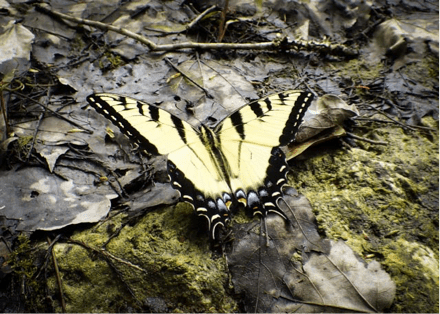
Photo: Hannah Owens
Check back when the expedition is complete—we’ll have some exciting preliminary data for you!
Hannah Owens, Post-doctoral Fellow, University of Florida

