
Training the Machines Update
Thanks for the great work helping us find fruits, flowers and unfolded leaves on Acer (the maples). That is going gangbusters and we hope you can continue the great pace of effort!
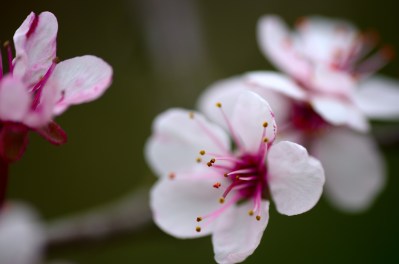
Overall:
Total classifications: 2998
Correct classifications: 2935
Accuracy: 97.9%
Correct positives: 2750
Sensitivity: 98%
Correct negatives: 185
Specificity: 96.35%
Flowers:
Total classifications: 2998
Correct classifications: 2918
Accuracy: 97.33%
Total true positives: 1592 (0.5310206804536357)
Correct positives: 1545
Sensitivity: 97.05%
Fruits:
Total classifications: 2998
Correct classifications: 2904
Accuracy: 96.86%
Total true positives: 796 (0.26551034022681785)
Correct positives: 739
Sensitivity: 92.84%
Total true negatives: 2202 (0.7344896597731821)
Correct negatives: 2165
Specificity: 98.32%
Training the Machines II
We wanted to thank all the Notes from Nature volunteers who helped with Training the Machines I, which focused on Prunus – the cherries, plums, almonds, peaches and nectarines. We don’t yet have the accuracy of our NFN volunteers compared to a gold standard dataset we created, but we are hard at work on that. We do have reconciliations done, which provide some information about how consistent everyone was, and here are some of those results: For flowers, there were 2775 strict matches (all three agreed) and 223 majority matches. For fruits, there were 2,663 strict matches and 335 majority rule matches. And for leaves unfolded, there were 2,589 matches and 409 majority rule matches. These are mostly encouraging results!
We also are going to be looking at other interesting questions with the results from this expedition, including some trends in accuracy over time — does scoring more samples mean people get better at this? Or maybe fatigue sets in? We also want to look at accuracy over different species — some might be more challenging than others (we are looking at you, desert almond!). We also see if strict or majority are more likely to be right or wrong. Anyway, we have some key hypotheses to test and we are working on those results and will report more. And of course all this work will be feeding into approaches to scale up machine learning, which we think is exciting – and which we also will have more to share with you soon.
We also need to ask for your help once more, this time on the plant group Acer, the maples. Acer, like Prunus, is well studied for phenology, and has an impressive historical and current record of observation. But Acer can also be challenging (talking to _you_, box elders!). So please pay close attention the help guides which can really help you out here.
Also, your work is really helping out @naturalista, who will be working on a dissertation chapter and papers comparing these results, so thank you so much for the help, and hopefully you will really enjoy this expedition focused on maples, an iconic shade tree that is especially valued in the heat of the summer.
— Rob Guralnick, University of Florida
Happy Anniversary!
Happy Anniversary to Notes from Nature!
Today — June 16th, 2019 — Notes from Nature is celebrating 6 years!
Why June 16th? For a little history, NfN 1.0 launched on Earth Day (April 22nd) 2013. We upgraded to NfN 2.0 on June 16th, 2016 and NfN 3.0 on May 9th, 2019. Although our history is a bit complicated since we have made major platform changes every 3 years or so, we have made it a tradition to celebrate our anniversary on June 16th.
Please help us celebrate 6 years of Notes from Nature by doing a few transcriptions today! June is a slow time of year and we sure could use some help finishing off those remaining NfN 2.0 expeditions.
With gratitude,
The Notes from Nature Team
p.s. Happy Father’s Day to all of the fathers out there! Thanks for your support!
A challenge!
We are very excited to launch a new Project related to the plants of Arkansas, U.S.A. However, there is some unfinished business on NfN 2.0. The expedition is called Plants of Arkansas: Digitizing Hendrix College’s Collection. It’s currently at 26% complete and we’d love to get it finished ASAP.
Please take a few minutes and do 5 (or more!) classifications to help us finish this one off.
You can find out more about the exciting things going on in Arkansas at the SUPERB and ACBC Facebook pages.
— The Notes from Nature Team
Notes from Nature 3.0!
The time has come. We encourage you all to come on over to Notes from Nature and check out our recent upgrade. We have even started a specific Talk board for you to post your comments and questions.
Below are a few important aspects of the upgrade.
The Notes from Nature page will be organized around Projects. This will give providers new ways to add content and engage with volunteers. Today we launch with two new Projects from our old friends at WeDigFLPlants and Calbug! These are similar to the groups that we used before, but give data providers many more options for serving their content.
All the remaining Notes from Nature expeditions from 2.0 can be accessed through the “Notes From Nature” project link until they are all complete.
The custom Notes from Nature Field Book should function as expected and should contain all your classifications from NfN 2.0.
You may notice that the new page does not contain an Organization wide statistics page or a completed expeditions page. Both of these will be added back in the coming months. In the meantime, you can see some limited Organization-wide and full Project-wide statistics on the respective landing pages and through the links found there.
You will also note that each Project has its own Talk page. While we may utilize this option more in the future, for now these will only contain Notes posts related to subjects within that Project. The main NfN board will remain our primary discussion place.
Since there is room for more content on the Project pages, the expedition cards that we used in 2.0 have been replaced with a simple button that only contains the name of the expedition. This will be the case for the time being, but we do plan to revamp these buttons again in the coming months.
The Organization and Projects links have moved around a bit, so be sure to look at the menu bar, but also the lower right link area of each landing page.
— The Notes from Nature Team
Coming soon (NfN 3.0)
Well, the time has just about arrived. If you are active on the Zooniverse in general or NfN Talk you have heard us mention an upcoming update to NfN that has been in the works for some time. We have been functioning on the NfN 2.0 platform (aka Panoptes) for almost three years now. We launched NfN 2.0 on June 16th, 2016. With over 1 million classifications and close to 8,000 registered volunteers we have outgrown that platform and are just about ready to move to NfN 3.0! There are lots of details to work out, but we plan to launch this week and hopefully as soon as this Wednesday.
There are some projects such as Snapshot Safari that have are utilizing this new platform that is called Organizations. You’ll notice that the look and feel is largely the same, but the site will now feature Projects that allow for more specific content to be added by our data providers.
It is worth noting that there will be no disruption of service for NfN during the upgrade and that all current expeditions on NfN 2.0 will be accessible and will be completed before, during and after the transition if needed.
Thanks to all our data partner providers and volunteers for making NfN such a success. We also want to thank the Zooniverse team for all their support and development!
— The NfN Team
Happy Earth Day 2019!

Dear NfN Community,
Happy Earth Day 2019!
Today we want to honor our wonderful NfN community for partnering with us to conserve and make available knowledge about the natural world. The NfN project gives you the opportunity to make a scientifically important contribution towards that goal every single day. We are so very thankful for your contributions today and every day!
Every transcription that is completed brings us closer to filling gaps in our knowledge of global biodiversity and our natural heritage.
— The Notes from Nature Team
New Nitrogen Fixing expedition
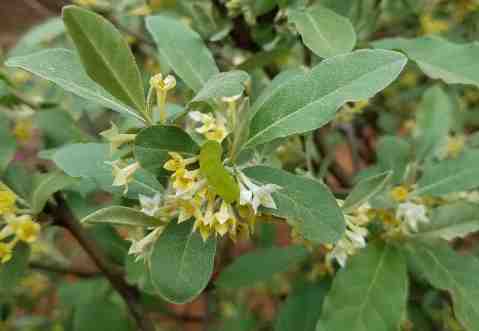
Elaeagnus umbellata, autumn olive. This temperate eastern Asian native is a non-legume nitrogen-fixer, hosting Frankia bacteria in its roots to fix atmospheric nitrogen. Like a number of other “actinorhizal” plants that have relationships with Frankia, nitrogen fixation has allowed this species to become invasive in several parts of the world.
Happy Citizen Science Day 2019
Happy Citizen Science Day 2019! Enjoy this fun video from SciStarter in honor of Citizen Science Day.
You can also see lots of great activity by checking out #citsciday
Consortium of California Herbaria on NfN
California has the most diverse native flora of any state in the United States, containing more than 1/3 of all U.S. plant species. Over 7,400 plant species, subspecies, or varieties occur in this state, and 2,331 (32%) of these are endemic. The California Phenology Thematic Collections Network (CAP TCN) was established in August 2018—thanks to funding from the National Science Foundation—to better understand this diverse and beautiful flora and how it will be affected by anthropogenic change. This network of 22 California herbaria aims to fully digitize (image, transcribe, and georeference) nearly 1 million specimens over four years and capture reproductive data (i.e., phenology) from specimen images.
Many herbaria in this project have transcribed herbarium specimen data in the past in collaboration with the Consortium of California Herbaria; however, there are still many specimens for which there are no associated data. Moreover, the majority of herbaria in this project have never before imaged their specimens. The CAP TCN provides an exciting opportunity to discover specimens previously locked away in cabinets and make these data publically available for research, education, and other uses. Data and images are being produced daily and can be found on the project portal: cch2.org.
You can help make this possible by participating in our California Phenology Notes from Nature expeditions. Our first several expeditions will be label transcription projects like many other great projects on Notes from Nature. In later expeditions, we will introduce scoring reproductive structures on herbarium sheets. Determining the phenology (timing of reproductive events) of these plants is crucial for understanding biotic change in this biodiversity hotspot.
For more information and updates on the project, visit the CAP TCN website at capturingcaliforniasflowers.org, follow the project on Twitter (@CalPhenologyTCN), or contact the project manager, Katie Pearson at kdpearso@calpoly.edu.
The California Phenology Thematic Collections Network is composed of the following herbaria: CSU Chico (CHSC), CSU Los Angeles (CSLA), UC Davis (DAV), CSU Fresno (FSC), CSU Humboldt (HSC), UC Irvine (IRVC), UC Los Angeles (LA), CSU Long Beach (LOB), CSU Fullerton (MACF), California Polytechnic State University, San Luis Obispo (OBI), Rancho Santa Ana Botanic Garden (RSA), CSU San Bernardino (CSUSB), Colorado Desert District, California Dept. of Parks and Recreation (BSCA), Santa Barbara Botanic Garden (SBBG), San Diego Natural History Museum (SD), San Diego State University (SDSU), CSU Northridge (SFV), San Jose State University (SJSU), UC Berkeley (UC/JEPS), UC Santa Cruz (UCSC), UC Santa Barbara (UCSB), and UC Riverside (UCR). Acronyms follow Index Herbariorum.
— Katelin Pearson, Project Manager, California Phenology Thematic Collections Network
 Notes from Nature