
And the winner is…
CalBug Leaf-cutter Bees! Late last week we asked which expedition would finish first Arkansas Dendrology: Part 7 or CalBug Leaf-cutter Bees 3. The Leaf-cutter Bees finished first by one day. More importantly, we beat the estimated time to completion (ETC) for both of these expeditions by over a week.
Thanks to all that helped and a special mention to @am.zooni,@maggiej, @QuantumSpaceGoat and a WordPress user named ilke for all the transcriptions and Talk participation.
The CalBug folks are working up a new expedition that will be posted very soon. For those looking for more plants from Arkansas U.S.A. we still have the Herbaceous Plants of the Ouachita Mountains expedition.
— The NfN Team
Finishing race?
We noticed today that two of our current expeditions are ~80% complete with an estimated time to completion (ETC) of 11 days. They are Arkansas Dendrology: Part 7 and CalBug Leaf-cutter Bees 3.
They aren’t directly comparable since Arkansas Dendrology: Part 7 has fewer overall images, but we wondered if our transcribers might want throw their weight behind one or the other? So which do you prefer red oaks or bees? Maybe you like them both. Try out a few and follow along on the Statistics page to see how things unfold.
Best,
The NfN Team
New expedition: Ferns and Fern Allies of Tennessee
We’re proud to introduce the maiden expedition of the larger “Digitizing the Herbarium Collections of Tennessee” project. The first expedition is a sneak peak into: the University of Tennessee and University of Tennessee at Chattanooga collections, and we’re starting with the Ferns and their allies! It is called Ferns and Fern Allies of Tennessee, Part 1.
Tennessee is centrally located in a geologically and botanically diverse region of the United States, making it critically important to understanding eastern North American biogeography and floristics. Our state spans ecologically variable environments from mountains to barrens to the Mississippi River floodplains. Due to a complicated evolutionary history, Tennessee is a botanical crossroads for floristic elements from the Gulf Coastal Plain, the eastern temperate forests, and the Midwestern prairies. We have created this expedition to begin the process of databasing ALL of Tennessee’s herbarium specimens into the modern digital arena.
Please, join us as we introduce these historic collections to the information age!
@calebadampowell and @joeyshaw, The University of Tennessee at Chattanooga
Changes to Completed Expeditions Page
We recently made some changes to the completed expedition page. We had so many expeditions on the page that it became hard to visually sort through them. We see this as a great sign of the effort and activity that has been taking place on the site!
You can now view the all completed expeditions sorted by date or select by a specific group type (e.g., Plants). We also now show the date that the expedition was completed as well the number of images and length of time that it took to complete.
We hope you like the changes and let us know what you think.
— The NfN Team
2nd Expedition of Spectacular Underwing Moths
We have a new expedition of Spectacular Underwing Moths! There are many new species of strikingly beautiful moths that were not in the first expedition. The goal of the project is to look at the distribution of underwing moths over the last 100 + years. These are data needed to understand how distributions might have changed over time, and we can only know by transcribing specimen labels that are pinned to each specimen from the Florida Museum of Natural History’s McGuire Center.
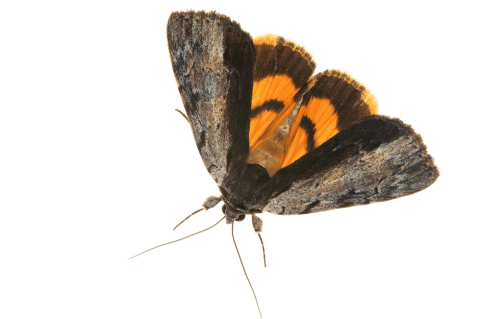
Photo by Larry Reeves
It’s important to remember that you will be looking at two images per moth, dorsal and ventral (upper and under side). The reason for this is because there has been important information on the back of labels. So be sure to check both images! While checking both images, look at the amazing patterns and colors of the moth! Most people think that moths are drab, but some, like underwings, are beautiful! Obtaining these data from both sides of the label is very important for research and conservation of these beautiful moths, so please help!
First moth expedition complete
Thank you citizen scientists for helping complete the first expedition digitizing the spectacular underwing moths! With over 600 images, its remarkable that this expedition was completed in just about 1 week. Thank you for taking the time to help. With this information, researchers can begin to examine their distribution changes, changes in host plants, and impact of climate change during the last century.
Be on the look out for the next underwing moth expedition coming very soon. The next expedition will have many new species. Maybe you will notice the differences!
-Stacey Huber (@huberlstacey) McGuire Center for Lepidoptera & Biodiversity, Florida Museum of Natural History
New Expedition: Host Plants of Virginia

Photo credit: Glenn Montague
Welcome to a new Notes from Nature Project and a series of upcoming Expeditions: Host Plants of Virginia. This series expands on the Pollinator Plants of Virginia theme to include vascular plant genera that support the larvae or adults of moths and butterflies. Herbivorous insects may pollinate our agricultural crops and native plants but they also sustain wildlife in Virginia U.S.A., notably many of our migratory songbirds. These insects are often specialists of particular plant groups or a particular type of food, such as sap, leaf tissue, pollen or nectar. Consequently, documenting local plant diversity is essential for studying these critical ecological relationships. For instance, the massive larvae of the Regal Moth (Citheronia regalis) are consume large quantities leaves from a limited number of tree genera, such as walnut (Juglans nigra) and persimmon (Diospyros viriginia) (see photo), yet consume nothing as adults! In this project, we have assembled herbarium specimens from 70 vascular plant genera that are known to support the larvae or adults of moths and butterflies in the Mid-Atlantic region. This information assembled primarily from the resources: Using native plants to attract butterflies, moths, bees and other pollinators in the Washington, D.C. area (Green Spring Garden, Fairfax County Park Authority, Virginia; 2016) and Bringing Nature Home: How you can sustain wildlife using native plants (Douglas W. Tallamy, Timber Press; 2009).
Andrea Weeks, George Mason University
Great progress (moths)!
Wahoo, with your help we are at 60% completion! Keep up the good work for we are more than halfway done. Be sure to get the word out to transcribe these spectacular underwing moths. Thanks again, this important work can’t be done without you all!
-Stacey Huber (@huberlstacey)
2nd expedition of the NHM Chalcids launched on ‘Magnified’
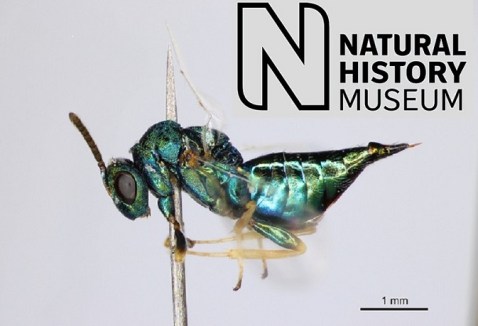
We’re pleased to launch our second batch of microscope slides featuring the parasitoid wasps called Chalcids (pronounced ‘kal-sids’), which lay their eggs inside other insects.
The eagle-eyed amongst you will have noticed that we have updated the Expedition title from ‘Killer Wasps’ to “Miniature Lives Magnified” and have made some small tweaks to the structure of the Workflow, and have also attempted to make our instructions and ‘Need more Help?’ text and examples more clear. Do drop us a note in the Talk forum if we can continue to make further improvements.
The Background Story
As part of our effort to digitise the collections of the Natural History Museum London, we have been collaborating with the Notes from Nature team to explore the potential of crowdsourcing the transcription of our specimen labels.
Our first pilot project was called The killer within: Wasps but not as you know them, and was launched in the newly-created ‘Magnified’ section on Notes from Nature on August 16th, 2016.
The purpose of this initial Expedition was to test the functionality of the platform, and the difficulty of the task for the community of volunteers.
Your response was stellar – over 600 people got involved in completing the first batch of 2,000+ slides – a particular thank-you goes out to our 9 super-transcribers @maggiej , @reinheitscat , @dfreezor , @Sagaman , @HDumas , @RedBee , @stevenhm , @rgerman , and @Mikusan. The data-set that you have created for us is looking good. We are therefore launching our second batch of slides with confidence!
About the Chalcids
These microscope slides feature parasitoid wasps called Chalcids (pronounced ‘kal-sids’), which lay their eggs inside other insects. These tiny wasps are parasitoids, meaning they lay their eggs inside other insects. When chalcid eggs hatch the emerging larvae eat the inside of their host. They then grow and pupate until mature enough to burst out as adults, finally killing the host.
We have 6286 microscope slides in the collection and are asking the crowdsourcing community to collect data about when and where the specimen was collected, who by, and what host species it was collected from, as well as some museum collection data.
Here’s an example:
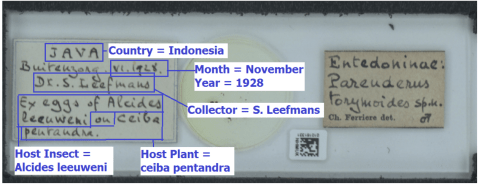
These microscope slides contain the smallest members of the Chalcidoidea Superfamily, which are unfortunately impossible to see in the images on Notes from Nature – we encourage you to take a peak at those that are large enough to pin – their variety and beauty is amazing!
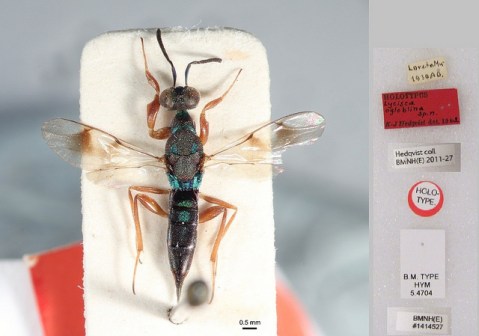
“Hundreds of Chalcidoidea species have been used in biological control programs to combat insect pest species that damage crops, this translates into millions of pounds of savings in the agricultural sector. Digitisation of Museum specimens such as those in our Miniature Lives Magnified project will help unlock and preserve species and distribution data essential for carrying out research to develop such programs.”- Natalie Dale-Skey Curator, Entomology
Pollinator Plants of Virginia Complete
Thank you to all who helped complete the inaugural Pollinator Plants of Virginia expedition! Pollinators are essential for our environment’s health as well as our food supply. With the completion of this first batch of specimens, we now know just a bit more about pollinators’ favorite foods and where they could be observed feeding.
The Xerces Society (http://www.xerces.org/) is an international society dedicated to the conservation of invertebrates – a taxonomic group that includes the majority of pollinating animals in the mid-Atlantic region. We have used their online resources to assemble this Expedition, which included specimens from over 50 plant genera known to be very attractive to native pollinators. By transcribing these herbarium records, you’ve helped us refine our understanding of these plants’ locations and flowering times, which can be used by pollinator researchers to find their quarry.

