
Help uncover the Virginia Military Institute Herbarium, a collection with deep roots in the botanical history of the state.
Nearly a century ago, the Flora Committee of the Virginia Academy of Science designated the herbarium of the Virginia Military Institute (VMIL) as a depository for specimens collected by this group. The group intended to create a flora of Virginia through extensive collecting and correspondence among botanists in the state. As a result, VMIL has many historically important specimens that document the Ridge & Valley flora of the 1920’s and 30’s, prior to the reintroduction of white-tail deer, impacts of invasive plants and land-use change in Virginia. The collection is also rich in specimens from decades before and after, as well as a surprising number of specimens collected from outside the state.

A word of note about transcriptions on this expedition. Most of the labels are handwritten in cursive script, and the scientific names need transcription. As a result, a bit more time and care are required for each label than is typical for most Plants of Virginia expeditions. Your efforts are greatly appreciated in making these data useable for research.
Please try it out the Plants of Virginia: Treasures of the VMIL Herbarium and help us digitize this important historical collection!
WeDigBio 2022 Appreciation
We closed out the last day of WeDigBio with over 3,900 classifications. That puts Notes from Nature at over 13,000 for the entire event.
Thanks to all the voluntters, moderators, presenters and as always the Zooniverse team for keeping the system running behind the scenes. Our heartfelt appreciation goes out to all the volunteers without whom we literally wouldn’t exist! Your contributions are critical and every classification is so important.
The good news is that Notes from Nature is open 24 hours a day 7 days a week, so if you enjoyed yourself please come back and consider spreading the word.
There are still lots of expeditions from a wide variety of organisms available on our site.
— The Notes from Nature Team
8 hours left (WeDigBio 2022)
There is 8 hours left in WeDigBio 2022. Thanks to all that have contributed by hosting or attending events, worked on an expedition or helped spread the word about the importance of mobilizing biodiversity data. We had over 11,000 classifications completed so far.
We have lots of great content left at Notes from Nature and don’t forget to download the Zooniverse mobile app and give our mobile based expedition a try. You can find it listed under Biology, Nature or History.
— The Notes from Nature Team
WeDigBio 2022 – Day 2
Yesterday was a fun and productive day of WeDigBio. Notes from Nature has received over 7,000 classifications since the start of the event and we are exited to see all the activity.
A special shout out to friends in Arkansas that completed over 1,000 classifications during Day 2!

There are lots of expeditions to work on and we have another online talk later today. The talk is titled: County Floras in the Digital Age: Using Digital Specimen and Observation Records to Promote Biodiversity Conservation. See our previous post for more information and how to join.
– The Notes from Nature Team
WeDigBio 2022 – Day 1
It was an exciting first day or WeDigBio. Thanks for all the contributions, thoughts, questions and engagement!

We hope you are enjoying Day 2 so far. Remember to check out the special symposium on improving data quality October 14th, 12pm EST (UTC -5). More information and the link you join can be found in our previous post: WeDigBio Symposium: Improving Data Quality, Data Linkages, and Data Communities
Lastly, if you are interested in app based expeditions download the Zooniverse app and look for our special expedition under the category Nature.
— The Notes from Nature Team
Transcribing Canada’s Natural History Data
Agriculture and Agri-Food Canada houses several of Canada’s national biological collections, including insects, plants, fungi, bacteria and nematodes. These biodiversity repositories help scientists explore problems in agriculture, biological control and pest management, study biodiversity and genetics and help inform policy makers working to protect Canada’s natural resources.
The largest two collections are the Canadian National Collection of Insects, Arachnids and Nematodes (CNC) and the National Collection of Vascular Plants (DAO), both in Ottawa, Canada. The CNC contains around 17 million specimens, while the DAO contains 1.5 million dried vascular plant specimens.
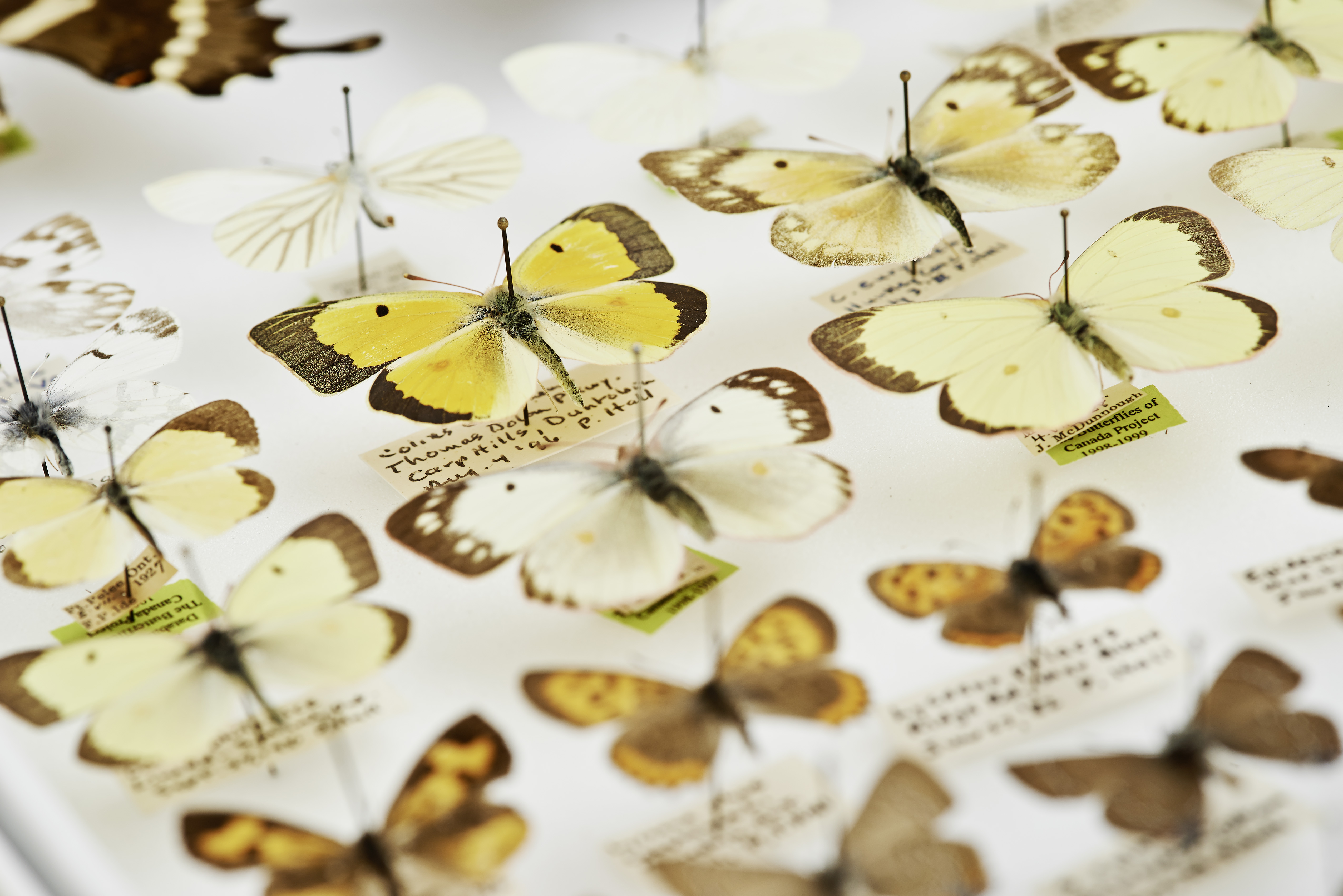
Our summer students have helped us capture over 1.3 million images over the past five years. With your help, we can turn these images into digital data that will then be put online for researchers from all over the world to study.

The DAO launched their Notes from Nature expeditions starting in April 2022 and have digitized poplars, willows and various plant species. The CNC is now launching our first expedition to digitize some of the Bristle flies (Tachinidae) of the CNC, with several more expeditions in the works. All of our active expeditions can be found in the project: Digitizing Biological Collections in Canada.
Join us in exploring Canada’s biodiversity on Notes from Nature!
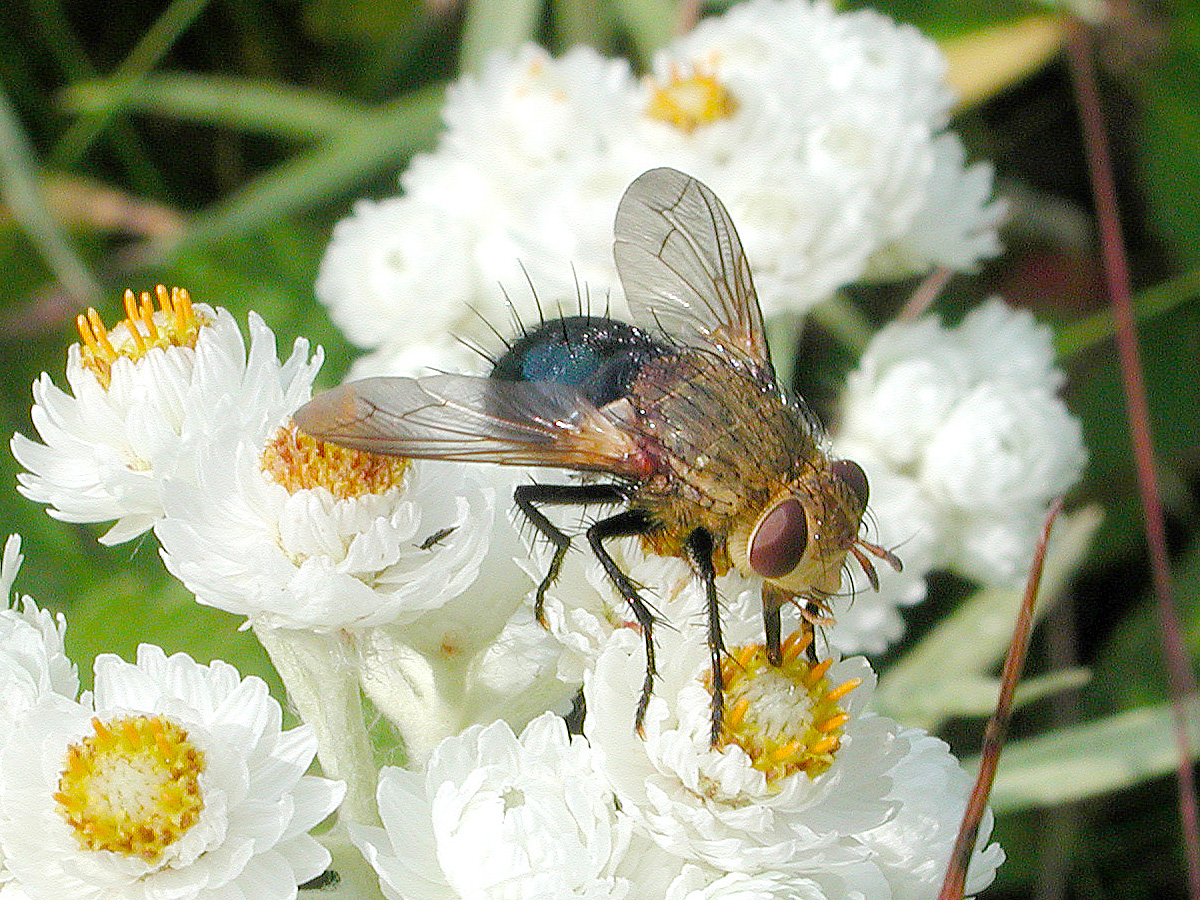
— Michelle Locke, Senior Entomology Collection Technician at the Canadian National Collection of Insects, Arachnids and Nematodes.
WeDigBio starts tomorrow!
The Notes from Nature team is excited for the start of WeDigBio tomorrow! WeDigBio (Worldwide Engagement for Digitizing Biocollections) is a global data campaign, virtual science festival, and local outreach opportunity all rolled into one. This 4-day, twice-a-year event mobilizes participants to create digital data about biodiversity specimens.
Notes from Nature is hosting lots of exciting expeditions featuring bees, moths, plants, moths, fleas, mites and more! Remember to complete 10 transcriptions to earn your WeDigBio 2022 badge.
Also, stay tuned for an announcement about a new Zooniverse mobile app based expedition.
There are events that you can attend online or in person. Be sure to check out a special Symposium on improving data quality which will take place on Friday.
— The Notes from Nature Team
WeDigBio Symposium: Improving Data Quality, Data Linkages, and Data Communities

Join us for a WeDigBio symposium this Friday 14 October 2022 at 12 noon EST (US eastern time)
WeDigBio next week
We’re ramping up for WeDigBio starting next Thursday (October 13). We’ve got lots of great content related to bees, plants, fleas, moths and even more to come.
Stop by Notes from Nature anytime to check out how you can help and as always please spread the word and encourage others to participate. All you need to do is visit Notes from Nature, select a project and then an expedition to work on. Every classification helps us unlock important biodiversity data that will become publicly available.
— The Notes from Nature
Measure Me Green is Relaunching!
The Big Bee Bonanza project launched a brand new kind of expedition for Notes from Nature, where we asked for your help to measure bee body size using a novel measurement tool. That first project was called “Measure Me Green” and included images of the widely distributed, green sweat bee (Agapostemon texanus). The response was incredible, and we finished the first measurement expedition in only a few days. Thanks to your help we also learned a lot along the way about how to create measurement expeditions and we learned from you about how we can improve the results of future expeditions like this one.
We looked closely into the measurement data and found that many of the measurements were longer than expected. Figure 1 illustrates this issue, with each line representing a measurement by a different participant. Some measured from the start of the tegula, others from the end or the middle. We think that this had to do with us not being clear enough about exactly where to draw the tegula lines. We plan to do a lot of measurements over the next few years and really want to get this right. We value your time and don’t often ask you to repeat classifications, but in this case, we feel it’s the best course of action to improve how we are doing things going forward.
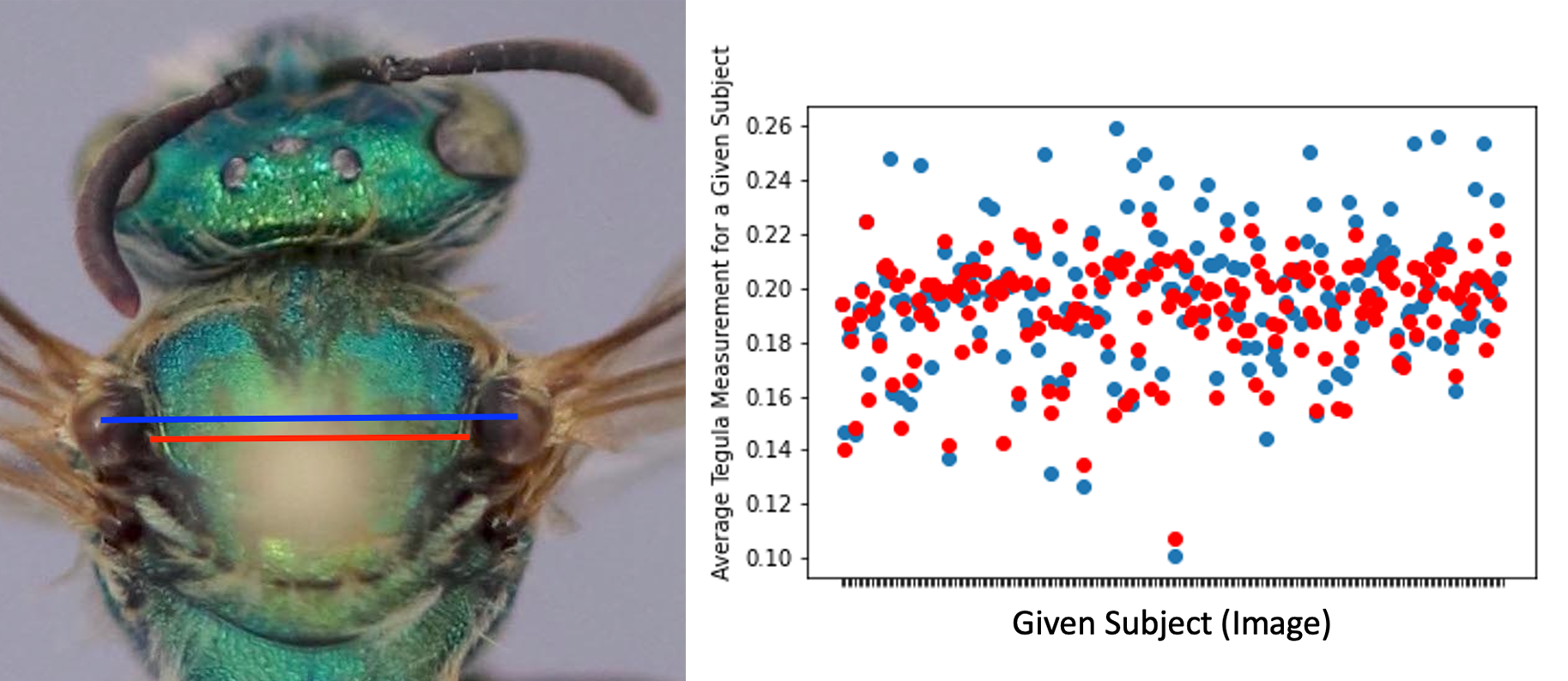
What we learned is that we need to improve our instructions. Since we found that most measurements were longer than expected, we have added new and improved directions for the next expedition. To see the new directions simply click the “Tutorial” tab in the upper right part of the screen. Bee anatomy is complicated, and the instructions are small, so we have updated them to provide clearly defined anatomical detail with new drawings. Figure 2 is an example of one of the new tegula illustrations. Have a look and let us know what you think.
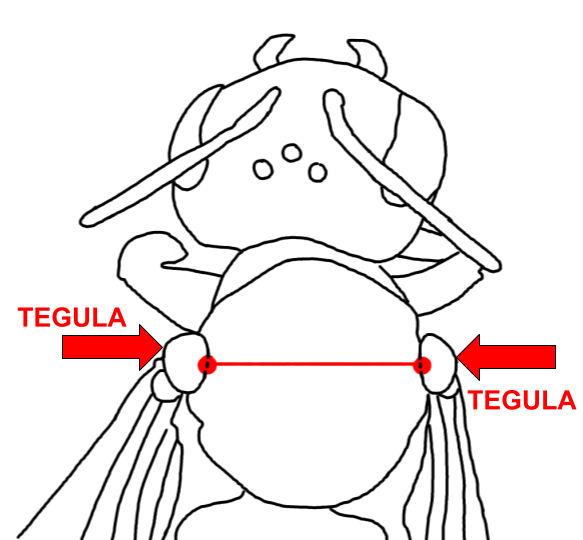
So let us test our new instructions together! We are now relaunching the Measure Me Green expedition as the Measure Me Green Revisited expedition with the new instructions so we can understand if we are providing enough detail to get a closer match between measurements taken in the lab and those provided by Notes from Nature participants. Thank you again for your help! Understanding the variation (and reasons why) between the measurements gives us great confidence in the results and helps us progress the science of bee biology together.
Get involved and give the project a try – your work is helping us improve our measurement tool.
– Katja Seltmann, UC Santa Barbara, Cheadle Center for Biodiversity and Ecological Restoration
– Alec Buetow, Undergraduate Researcher, UC Santa Barbara, Cheadle Center for Biodiversity and Ecological Restoration
– Rosie Manner, Undergraduate Researcher, UC Santa Barbara, Cheadle Center for Biodiversity and Ecological Restoration
 Notes from Nature