
Irene Moon and NFN
The University of California Santa Barbara Cheadle Center for Biodiversity and Ecological Restoration Director has an alter ego. She goes by the name Irene Moon, and she came into being decades ago when Katja Seltmann first started creating science-inspired performance art. Some of the performances are artier, but many of them are specifically created to Perform Science!
This intersection of science and art opens up interesting ways to communicate about natural history collections and science in popular culture. Seltmann and her partner, Yon Visell, have a weekly radio show called “Unknown Territories”, an hour-long cultural arts program on the UCSB campus radio station, KCSB 91.9fm. The show airs on Monday 10-1100am PT and streams online at kcsb.org.
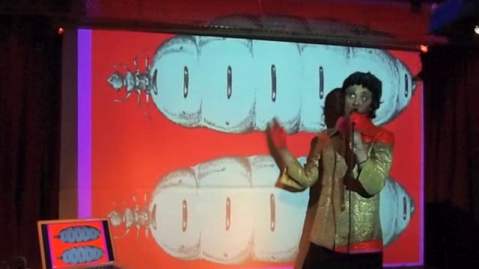
Several of her recordings of science inspired radio shows are available online. You can listen to interviews with researchers about various topics including rust, evolution and field recordings through the Let’s Talk Science series. Recent shows are archived through the Internet Archive and found on the Unknown Territories website. Just like with the collection data she puts online, all of these recordings are all released under Creative Common licenses for reuse, or put into the Public Domain.
Natural history collections work has inspired much of the music, and Irene has several pieces for radio that are specifically about natural history collections. “Curator Bill” is a fictional character that appears throughout the radio pieces, and the audio introduction to Bill.
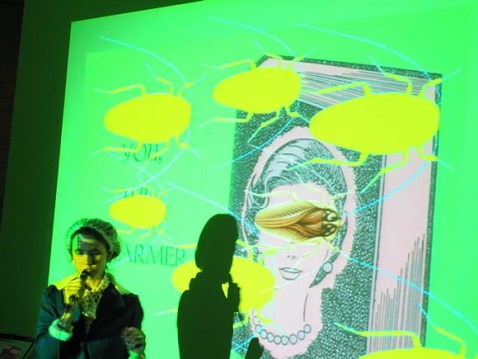
So next time you need perk up a boring lecture for that intro bio class, think about singing songs in a gold jacket, or create music about the topic. She has performed absurd Scientifically Speaking with Irene Moon musical lectures where collections are highlighted as the character of one of her personal heroes, EO Wilson. “Most of the lectures are done in late night musical venues, rock clubs, and raves. The information is factual, inspired by research, and people do learn when they least expect it.”
Find out more at begoniasociety.org
Check out some of her performances at the links below.
Editor’s Note: Katja Seltmann is one of the Curators participating in this weeks WeDigBio Events. You can check out her current expedition (California Plants) on the NFN Herbarium page.
WeDig Tropical Ferns!
We are excited to join folks all over the world participating in WeDigBio by sharing these spectacular photos of neotropical ferns. The plant diversity in the American tropics is stunning, and it is not uncommon for new species to be found, already collected, hiding in the herbarium! We love transcribing labels for these plants because the specimens are so beautiful. It’s fun to imagine what these tropical ecosystems are like. Please join us in the exploration!
WeDigBio kicks off today – help us set our Natural History collections free!
 There has been a flurry of activity at Notes from Nature these past few days, as a number of new Expeditions join us in the Plants section, and new sections for Aquatics and Fossils are launched, all in time for the 3-day WeDig Bio event that launched today!
Starting in Australia….
 It all kicked off at the Australian Museum, where the DigiVol team gathered a group of volunteers to spend the day transcribing some fascinating specimens – check out their projects here: https://www.wedigbio.org/content/digivol. You can help out with these projects at any time, or if that’s your corner of the world, why not join them on Saturday for a great chance to hang-out with others interested in Biodiversity Collections around the world?
….over to Europe – live in London at the time of writing ….
 As the planet turned, we were handed the baton here in London at the Natural History Museum, where we have a team of Visiteers joining us in our Specimen Preparation Area in the Cocoon, helping us to transcribe our ‘Killer Within’ chalcid slides. These tiny wasps are parasitoids, meaning they lay their eggs inside other insects.
When chalcid eggs hatch, the emerging larvae eat the inside of their host. They then grow and pupate until mature enough to burst out as adults, finally killing the host. These tiny creatures play a very important role as biological control agents – they are the natural enemy of a wide range of insect pests that damage our food crops, thus reducing the need for chemicals and pesticides, and saving a significant amount of money as well. You can join us too!
Primulaceae from Royal Botanic Gardens Kew
 We’re joined by our London neighbour Royal Botanic Gardens Kew, who have launched their Primulaceae Expedition in the Herbarium section.
The tropical Primulaceae form a species-rich but poorly known group. Research at Kew aims to further understand the taxonomy, evolution and diversification of the family to mirror our understanding of the temperate Primulaceae. When thinking of Primulaceae, most of us will picture the spring flowers primroses and cowslips.
These are not only charismatic wild flowers but are also important in horticulture. Traditionally, Primulaceae contained only temperate herbaceous groups and whilst known to be very closely related to Myrsinaceae, was kept separate, primarily on account of Myrsinaceae being woody and tropical. However, based on a suite of similar morphological characters and more recent DNA evidence, all species of Myrsinaceae have been placed in Primulaceae. Come take a look!
Amaranthaceae from the Botanischer Garten Berlin
 And just a short trip down to the European continent, we are joined by the Botanischer Garten und Botanisches Museum Berlin, and their newly launched Amaranthaceae Expedition in the Herbarium.
These plants represent the most species-rich lineage within the flowering plant order of Caryophyllales, and are economically important to study because they include vegetables such as spinach (Spinacia oleracea) or forms of beet (Beta vulgaris) (beetroot, chard), and ‘pseudocereals’ such as lamb’s quarters (Chenopodium berlandieri), quinoa (Chenopodium quinoa) and kañiwa (Chenopodium pallidicaule).
A number of species are popular garden ornamental plants, (such as Alternanthera, Amaranthus, Celosia, and Iresine), others are considered weeds (such as redroot pigweed (Amaranthus retroflexus) and alligatorweed (Alternanthera philoxeroides)), and many others cause pollen allergies.
Up Next: North America
Where will you visit? What projects will you join?
Now it’s your turn!
Your help transcribing these specimen labels will allow many more scientists around the world to study the mechanisms of their evolution and investigate biological diversity around the world.
It is essential to link information about organisms and specimens in the collections, to secure this data sustainably and to make it widely accessible and usable. You are helping us to make these collections accessible around the world, and this important information on biodiversity available to everyone.
If you’d like to find an event happening near you, check out the WeDigBio event listings. But you can take part in any of these digitisation projects, from anywhere in the world!
Unlocking Northeastern Forests: Nature’s Laboratories for Global Change
Though plants provide the food, shelter, and oxygen that sustain all other living beings, we are only beginning to understand how even the most familiar plant ecosystems are responding to environmental disturbances such as pollution, human land-use and global climate change. Fortunately to understand our future, we can also look to signs from the past.
Historic plant collections can provide an essential perspective for studying long-term changes in these environments because they chronicle distinct species–and whole communities of organisms–that have lived in particular places and at different points in time. Right now, the New York Botanical Garden is partnering with 14 other research institutions to develop a groundbreaking new dataset for all specimens of vascular plants collected from the Northeast US*.
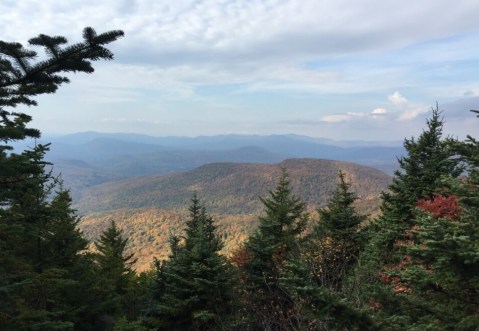
By connecting this network of researchers to the data captured by 1.3 million preserved specimens, participants in this citizen science expedition will help to illuminate subtle variations in species richness and forest composition over time. With your help, understanding how changes in the environment have affected the forests of yesterday will help us to predict how current human behavior will shape the forests of tomorrow!
*This project is funded by an award from the National Science Foundation (EF-1503583)
Charles Zimmerman, Herbarium Collections & Outreach Administrator, The New York Botanical Garden
New specimen type: Aquatic insects
We are excited to embark on a new insect-themed expedition, Aquatic Insects of the Southeastern United States. This expedition will delve into the ‘wet’ portion of the Clemson University Arthropod Collection, where vast holdings of aquatic insects are preserved and curated. Aquatic insects are a very diverse group, covering some members of nearly all the insect orders (from larval flies to adult beetles), and all the members of several large orders, like mayflies, stoneflies, caddisflies, and dragon- and damselflies.
Aquatic insects are important because most have rather narrow environmental tolerances, and are very sensitive to changes in water temperature and quality – they are important sentinels, or canaries in the aquatic coal mine, helping scientists and environmental professionals measure aquatic ecosystem health and water quality. By improving our understanding of their historical distributions around the southeastern United States, we will be that much better able to assess and interpret modern and future changes in their distributions and abundances.
Fossil preparator badges
We are excited about launching two new “themes” this week in advance of WeDigBio. Yesterday, we launched our first fossil themed expedition, and we want to let you know about some cool badges you can get for helping us with efforts to transcribe fossil trilobite labels. You gain the first badge, Junior Preparator (shown large below) for just taking part and doing 1 transcription. The Senior Preparator badge is earned for completing 10 transcriptions and the Curator badge for completing 100. Get all three!


Help us transcribe fossil collections
Join paleontologists of all ages in looking at images of fossil specimens and contribute to our understanding of Earth’s past life.
Notes from Nature is pleased to announce that we’re unveiling our fossil label transcription service in honor of National Fossil Day and WeDigBio. Log in or sign up now to begin looking at fossil specimens from around the world in various museum collections.
Our first transcription expedition consists of a significant collection of Cambrian trilobites casted by Charles Deiss, of Indiana University. Dr. Deiss visited many world-class institutions to make these plaster molds as perfect replicas of the fossils contained in the original museums for his research. Plaster molds were used by Dr. Deiss and other scientists in the early part of the 20th century because 3D scanning and printing didn’t exist yet! Fortunately, sharing research data is considerably easier with new technology AND helpers like YOU! Thanks for enabling others to find out more about this world-class collection of fossils and molds by transcribing labels from this unique collection!
Get Back, to where you once transcribed
National Fossil Day (and a special announcement)!
Every year, October 12th marks a special day in which we celebrate the history of life on earth with the best record we have available…fossils!
On this day we are very pleased to announce that we will be launching a new interface for fossil transcription just in time for WeDigBio. We are collaborating with Indiana University and the first expedition will consists of a significant collection of Cambrian trilobites.
Please keep an eye out over the coming days for this new set of specimen images and consider helping out with this unique collection.
— The Notes From Nature Team
SERNEC WeDigBio events
A big event is around the corner for herbaria worldwide. WeDigBio, a worldwide digitizing event, is happening October 20-23, that’s just 8 days away! Many herbaria are planning events for students and citizen scientists to gather online or onsite for talks, workshops, and more. This is all in an effort to encourage the digitizing of collections. SERNEC is planning to have 9 collections represented. You can see if there is one happening near you on the WeDigBio event list.
This is not just limited though to large herbaria but also smaller universities collections. This event will give people an opportunity to learn what is going on in the natural history collection world and they can help mobilize critical biodiversity data for public use. Please consider joining us onsite or online next week.
Jordan Willet — Graduate Student at Appalachian State University

