
WeDigBio starts tomorrow and a milestone
The Notes from Nature team is excited for the start of WeDigBio tomorrow! WeDigBio (Worldwide Engagement for Digitizing Biocollections) is a global data campaign, virtual science festival, and local outreach opportunity all rolled into one. This 4-day, twice-a-year event mobilizes participants to create digital data about biodiversity specimens.
Notes from Nature will be hosting lots of exciting expeditions featuring plants, beetles, flies, mammals, and even fleas. Remember to complete 10 transcriptions to earn your WeDigBio 2021 badge.
We are also hosting 3 live science talks:
- Thursday Michael Belitz will talk about bias in citizen science data. More information and registration.
- Friday will feature Joe Miller who will talk about GBIF. More information and registration.
- Saturday, Theo Witsell will talk about rare plants in Arkansas. More information and registration.
Lastly, Notes from Nature is approaching a major milestone: 3 million transcriptions completed on our current platform. With your help, it might even happen during the event.Log on and help us celebrate this amazing milestone.
We will also be using the hashtag #WeDigBio on Twitter and Facebook. We will also postsome blog updates during the event.
With appreciation,
The Notes from Nature Team
WeDigBio Talk (How GBIF integrates and shares biodiversity data)
We are excited to announce the last in our series of talks for WeDigBio. This talk will be presented by Dr. Joe Miller, Executive Secretary of GBIF (Global Biodiversity Information Facility).
The talk is titled: After digitization – how GBIF (Global Biodiversity Information Facility) integrates and shares biodiversity data.
It will take place this Friday, October 15th at 2pm eastern (UTC -4).

GBIF, the Global Biodiversity Information Facility, is an international network and data infrastructure funded by the world’s governments and aimed at providing anyone, anywhere, open access to data about all types of life on Earth. The world has thousands of natural history museums holding billions of records about where and when a species has been observed. GBIF combines all this information together so that anyone can easily access it for scientific research, government policy or for general interest. GBIF also tracks how the data is used so that museum workers, administrators and volunteers can see the remarkable and unintended ways people use free and open access data. GBIF has grown to share many types of data besides museum specimens and now share nearly 2 billion data points. This talk will describe what happens to digitized data once it is set free.
To register in advance for this meeting:
https://ufl.zoom.us/meeting/register/tJMtcO6pqTkjGNYow79HLnxeREV1DTFVKqof
We hope to see you there,
— The Notes from Nature team
WeDigBio, coming soon!

WeDigBio is happening later this week. This 4 day event will take place from October 14-17.
We hope you’ll join us for transcription fun, science talks and other activities. You can preregister for the science talks happening Thursday and Saturday.
Remember you can also earn your WeDigBio badge by doing 10 classifications anytime during the event!
Looking forward to it,
— The Notes from Nature Team
WeDigBio Talk (Biases in Citizen Science data)
We are excited to announce a second WeDigBio talk.
This talk will be presented by Michael Belitz from University of Florida. The title is ‘Addressing biases in citizen science data to document phenology patterns at broad spatial and taxonomic scales.’
It will take place October 14th at 12:00 PM Eastern Time (UTC -4). A short described and registration information is posted below. We hope you can make it!
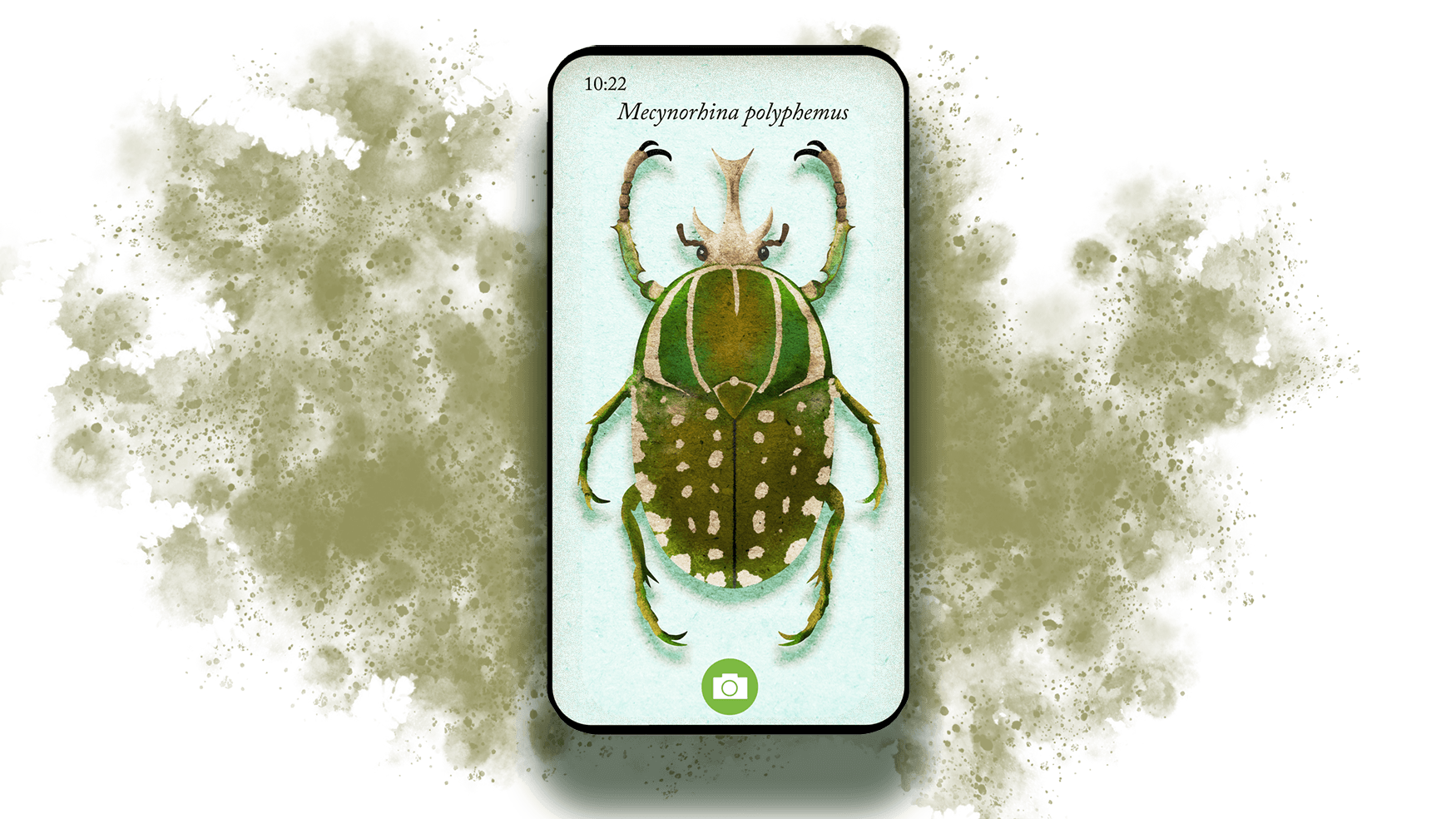
Shifts in the timing of seasonal events (i.e., phenology) are one of the most immediate and apparent responses to global climate change, but data limitations have made examining phenology patterns across greater taxonomic, spatial, and temporal scales challenging. One growing opportunity is leveraging rapidly increasing data resources from citizen science platforms. However, these are biased spatially and taxonomically, potentially leading to erroneous biological conclusions if appropriate data curation and modeling strategies are not used. Here, I will present recent research exploring the novel methods of estimating phenology metrics using incidental citizen science observations. I will the accuracy of phenology estimators across a suite of simulated and empirical examples, and I will also present a case study that showcases a framework that can be used to answer fundamental questions of insect phenology across broad spatial and phylogenetic scales using citizen science records from iNaturalist. Collectively, incidental citizen science data provides a sizable resource for phenological research and continued work to integrate the strengths and weaknesses inherent to these data promises to provide critical insight into pressing ecological issues.
Register in advance for this meeting:
https://ufl.zoom.us/meeting/register/tJwqc–qpjkoHNAYhLgTAt_Quusbg17pfRDQ
After registering, you will receive a confirmation email containing information about joining the meeting.
WeDigBio Talk (Arkansas rare plants)
WeDigBio is just a week away! We are getting ready for the event and want to announce the first in a series of talks that everyone is invited to.
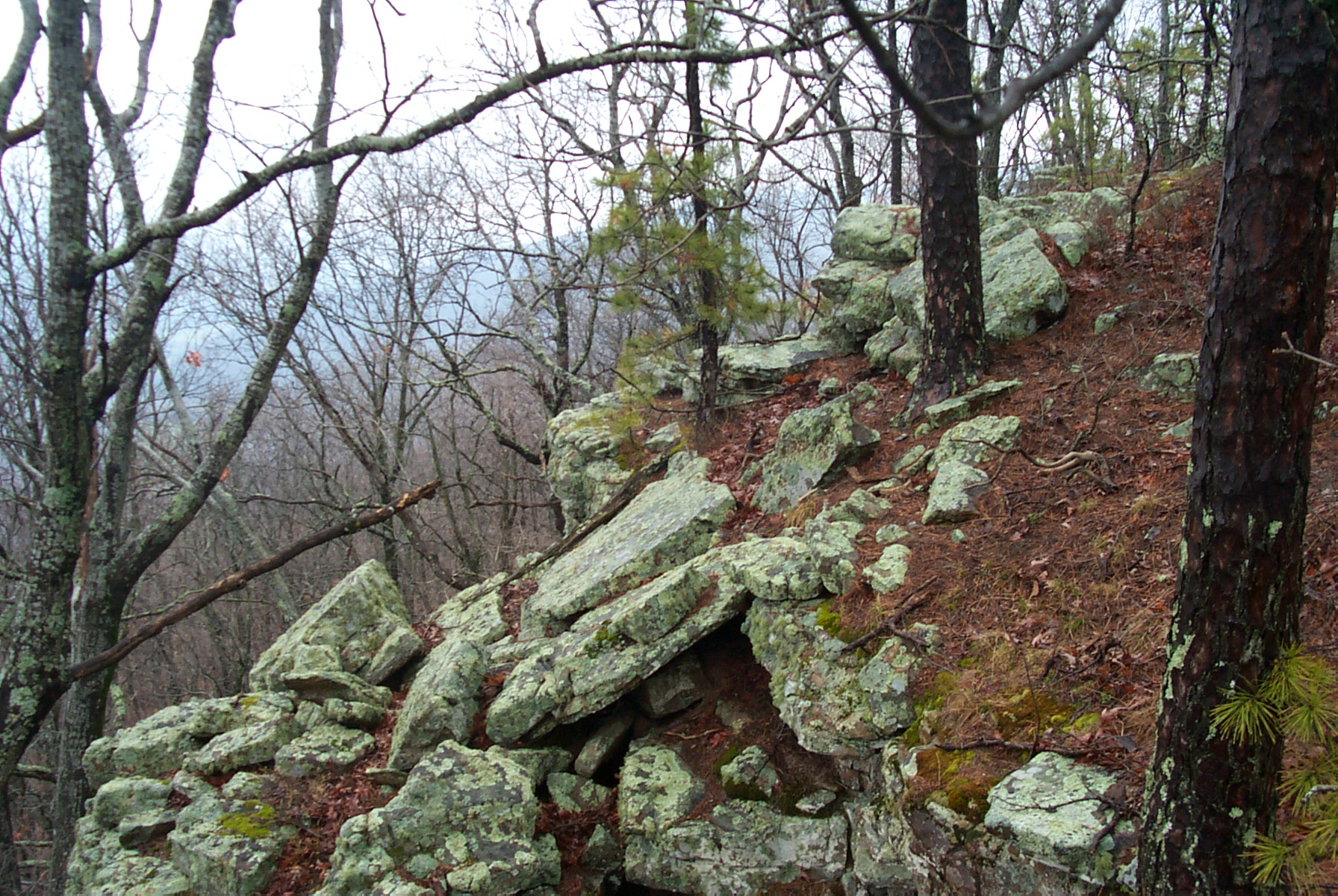
Calcareous cliff at Campbell Hollow, photo by Theo Witsell.
The first is will be presented by Theo Witsell, Arkansas Natural Heritage Commission Chief of Research and Inventory / Ecologist / ANHC Herbarium curator. It is titled “The Significance of Cliff and Talus Communities as Habitats for Rare Plant Species in the Interior Highlands of Arkansas” and will be held on Saturday, October 16 from 7-8:00 pm central time (UTC -5). A description of the talk is below.
To register in advance for this meeting:
https://ufl.zoom.us/meeting/register/tJMrdOyvqD4tGdMKXu7SxBT-U_29NGPYz7rv
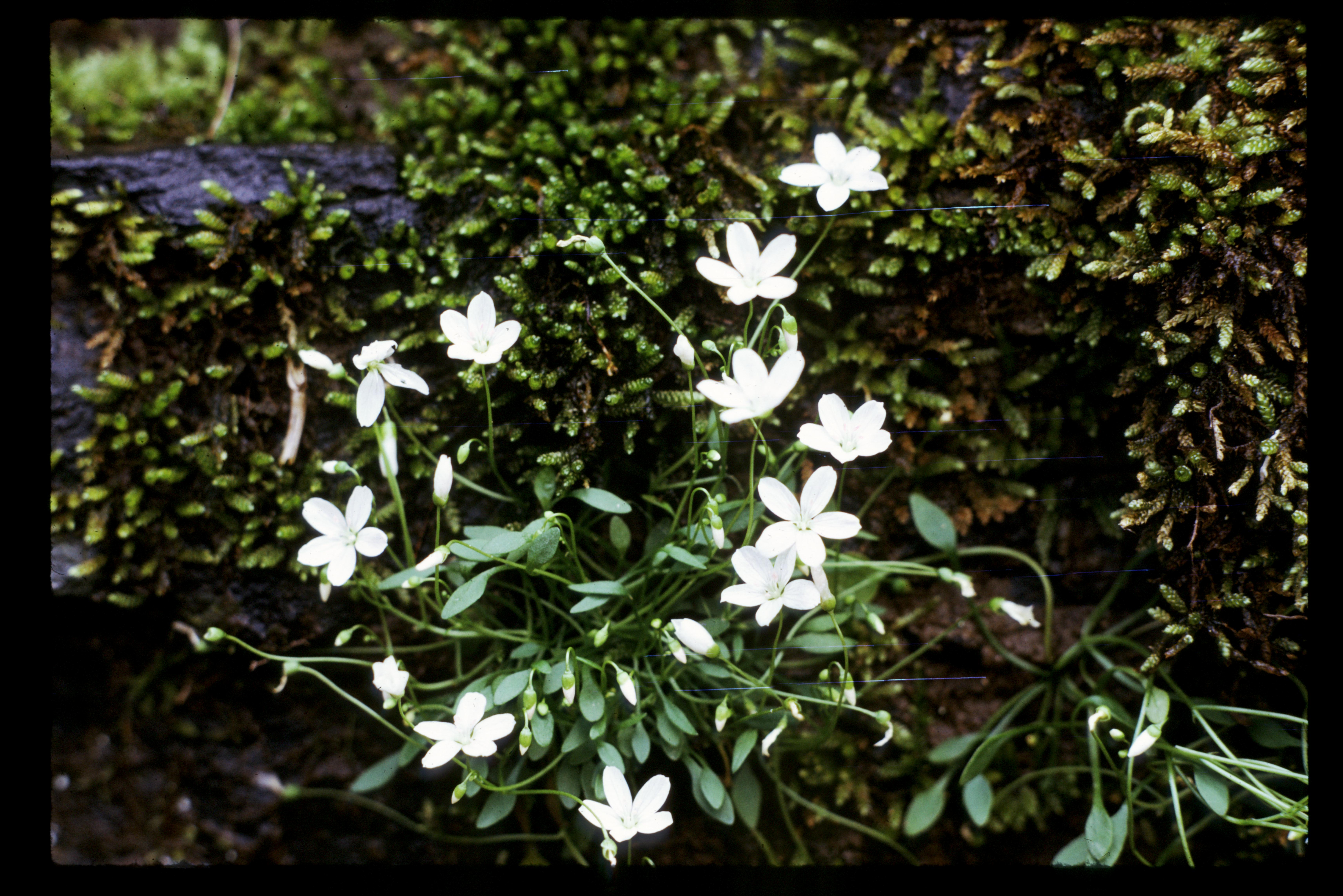
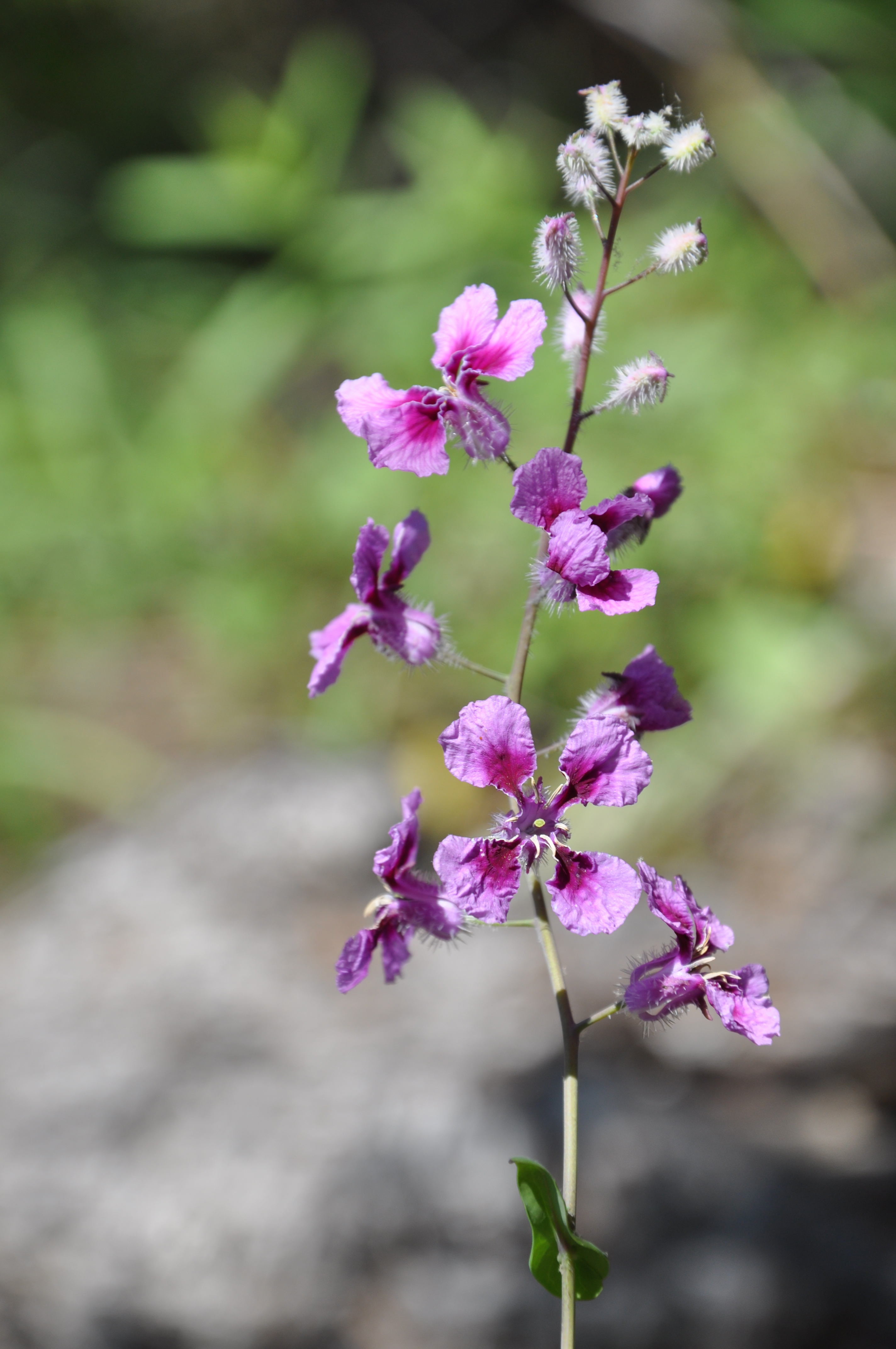
Left: Arkansas Springbeauty (Claytonia arkansana) grows in rock crevices of sandstone cliffs in three counties in the Interior Highlands of Arkansas, photo by Theo Witsell. Right: Ouachita Twistflower (Streptanthus squamiformis), a Ouachita Mountains endemic, grows in sandstone and shale glades in three counties of southwestern Arkansas and one county in southeastern Oklahoma, photo by Brent Baker.
After registering, you will receive a confirmation email containing information about how to join.
The Plants of Arkansas project has hosted many expeditions with plants collected from the Interior Highlands for almost three years. In this presentation, you can learn about the cliff and talus communities in Arkansas, which are known to support many state and globally significant plant species of conservation concern, yet no systematic analysis of these habitats or the rare species they support has been conducted. Cliff and talus habitats in the Interior Highlands (the Ozark Plateaus, Boston Mountains, Arkansas Valley, and Ouachita Mountains) are typically associated with medium- to large-sized streams, but also occur in association with faults and other geologic contacts. These habitats have been heavily impacted by inundation following the construction of several large reservoirs on many of the larger stream systems, most notably the White River system in the Ozark Plateau, and the Ouachita River system in the Ouachita Mountains. However, remaining habitat still supports rare species. An overview of the flora of conservation concern in these communities will be presented in terms of ecoregion, geologic substrate, moisture gradient (wet to xeric), and physical site characteristics such as microhabitat, slope, and aspect. Several of the plants of conservation concern in these habitats are endemic to the Interior Highlands and others represent significant range disjunctions. Biogeographical patterns of these rare species present will also be discussed. Important endemic plant taxa associated with cliffs and related outcrops in the region include Amorpha ouachitensis, Claytonia arkansana, Dirca decipiens, Elymus churchii, Elymus glaucus ssp. mackenzii, Heuchera villosa var. arkansana, Houstonia ouachitana, Liatris compacta, Quercus acerifolia, Solidago ouachitensis, Streptanthus maculatus ssp. obtusifolius, Streptanthus squamiformis, Tradescantia ozarkana,and Valerianella ozarkana. Appropriate management of these sites will be discussed.
WeDigBio October 2021 Save the Date
The Notes from Nature team is very excited about WeDigBio 2021. The event will take place October 14 – 17. We hope you join us! In the mean time if you are interested in hosting an expedition on Notes from Nature for the event please fill out our interest form as soon as you are able.
More about WeDigBio:
Worldwide Engagement for Digitizing Biocollections (WeDigBio), is a global data campaign, virtual science festival, and local outreach opportunity, all rolled into one. This 4-day, twice a year event mobilizes participants to create digital data about biodiversity specimens, including specimen slides, plants on sheets, insects on pins and more. This year you can expect lots of online events and webinars that you can join as your scheduling and interest allows.
— The Notes from Nature Team
Roses and Legumes of Alberta
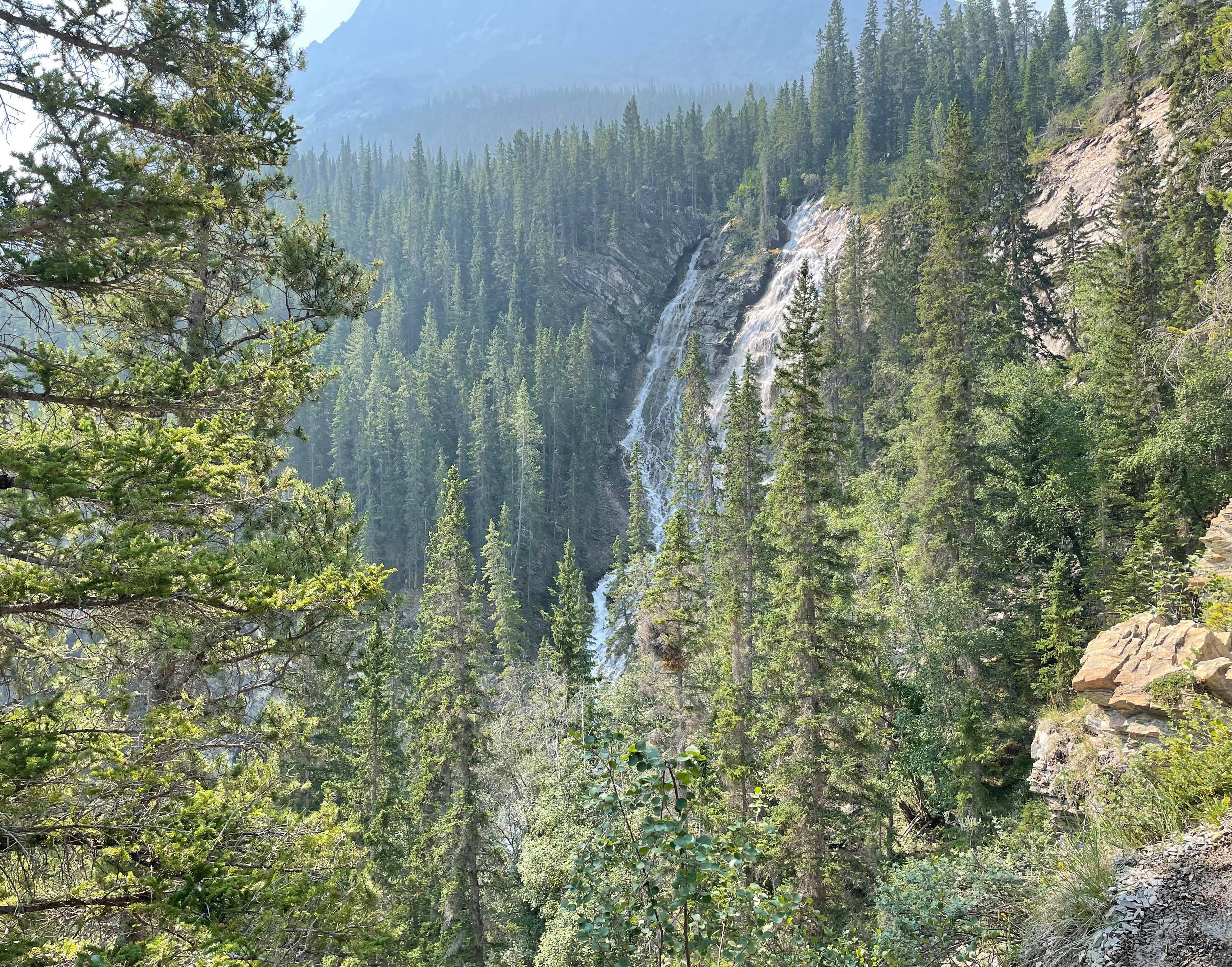
With an extensive collection of plants from Alberta and around the world, the University of Calgary Herbarium is dedicated to the collection, preservation, and documentation of plant specimens. We are excited to announce our first expedition with Notes from Nature for transcribing specimens. This expedition focuses on specimens from the Rose and Legume families collected in Alberta. From the clovers growing in the cracks of the sidewalk, to the wild strawberries found in the mountains, there is a wide range of specimens to see in this expedition.
Through the help of volunteers such as yourself, data regarding these specimens would swiftly become available to all who share an interest in botanical specimens. We hope you enjoy your time getting to know the Roses and Legumes of Alberta and we thank you for your participation!
You can try out the new expedition on the Notes from Nature Herbarium Project.
— The University of Calgary Herbarium Team
OC – Are They Good or Not?
We are excited to announce our next installment in the Digi-Leap series. Our last expedition in this series asked you to identify the labels on a specimen and the type of text it contained.
Our next step in the larger project is to automatically pull the text out of the labels using a method called OCR (optical character recognition). OCR has been around for a long time and this is certainly not the first attempt to do this for biodiversity specimens. There are many challenges to OCR of museum specimens (e.g. different handwritings and fonts) and no one solution has come forward to resolve this challenge. What we are striving to do is build off of what has been done in the past and develop a human in the loop workflow. This means that we anticipate that some specimens can be transcribed automatically, but many will still require human eyes. This is where you and Notes from Nature can be a huge help!
Next up will be an expedition where we ask volunteers to look over the OCR results and tell us how it did. Hence the name, OC – Are They Good or Not? Get it? We are all about the puns. We’ll present images of the original label and OCR output and ask volunteers to tell us what errors, if any, they see. We don’t need to know everything single error letter by letter. We just need to know if there are errors and what kind they are. For example, if a word or letter is present in the original label, but not the OCR output that is called a deletion. You may notice that some images are side by side while some are presented as one on top of the other. We did this in order to make the images fit as best we could within the image viewer.
If this sounds fun to you, please head over to the Labs Project and give it a try.
— The Notes from Nature Team
Reflecting on MI-Bug’s Progress So Far
The pausing of the MI-Bug project gives its creators, Erika Tucker (formerly of the University of Michigan Museum of Zoology Insect Division) and Justin Schell (Director of the Shapiro Design Lab) a chance to reflect on what’s been accomplished so far with the generous support of Notes From Nature, but also the many volunteers who make such work possible!
Like so many other collections around the world, the University of Michigan Museum of Zoology (UMMZ) Insect Collection has millions of specimens (about 4.5 million) housed in its collection, less than 10% of which are digitized and accessible. These undigitized, and usually uncataloged, specimens represent “dark data”. This means in order to utilize the millions of specimens and their associated ecological data, someone has to physically go into the collection and search for it. And know to go look for it in the first place. Often no small feat! By digitizing the specimens and their associated data, we are making the data available in a usable format and accessible to researchers around the world.
When Tucker joined the UMMZ Insect Collection, new cataloging protocols were implemented that incorporated imaging the specimens with all their labels – not just directly transcribing the specimen data into the museum database. While this takes some additional upfront time processing the specimens, it also allows the UMMZ Insect Collection to participate in Notes from Nature. By utilizing the amazing community of volunteers on Notes from Nature, an incredible amount of time is saved in the long run digitizing specimens. This has allowed the museum to mobilize many, many, more important specimens and ecological records much faster than it would have otherwise been able to.
This setup of in-person specimen imaging combined with volunteer transcription has also provided a unique opportunity for volunteers to get a sneak peek behind the scenes at the museum. The Talk Board and feedback from so many talented volunteers has additionally facilitated the ability for Tucker to engage with volunteers and share her knowledge and enthusiasm of museum and insect related topics. In a time when the museum had to shut its doors to many of its normal visitors and volunteers due to the pandemic, this project and the interactions with its volunteers has really been essential to continuing museum productivity, as well as keeping Tucker sane.
In terms of numbers, since the launch of MI-Bug in April of 2020, more than 1400 different volunteers from across the world contributed more than 82,000 transcriptions. Their efforts resulted in nearly 27,000 specimen labels from grasshoppers, crickets, and wasps from the Insect Division’s collection. Data from these specimens can now be included into projects like the Global Biodiversity Information Facility and contribute to research projects in Michigan and around the world!

There are additional people to thank for the success of MI-Bug so far:
- Michael Denslow of Notes From Nature, who was excited to include MI-Bug in Notes From Nature and shared his technical knowledge and experience as we developed and implemented MI-Bug
- am.zooni for her expert moderation and assistance on the Zooniverse Talk Boards
- Alexandria Rayburn, Mark Ramirez, and Tony Sexton, former School of Information students at the University of Michigan who helped with the initial development and build of MI-Bug
- Robert McIntyre, Lauren Havens, and Kat Hagedorn at the University of Michigan Library, for assistance with loading images into Zooniverse
- Max Ansorge and Amber Ma, Shapiro Design Lab Residents, for helping with data cleaning
- Peregrine Ke-Lind, Alan Ching, Chloe Weise, Yeaeun Park, Ellen James, Siena McKim, Tom Hayek, Ellen James, Henry Smith, Neha Bhomia, Troyer Wallance-Evan, Elizabeth Postema, Andrea Lin, for producing the many images used in this project
While the project is temporarily paused as Erika moves on from the University of Michigan, we hope to be back with more specimens soon, so we can continue engaging with the wonderful Notes From Nature community!
— Justin Schell and Erika Tucker
Our 8th Anniversary
Today is our 8th anniversary!
We are thankful for your contributions every day and for making this project possible, but today we are especially thankful. We wouldn’t still be here without our amazing volunteers, science partners, data providers, the Zooniverse team and of course for our sponsor the National Science Foundation for keeping the project going day after day and year after year.
Please help us celebrate 8 years of Notes from Nature by doing a few transcriptions today! We also encourage you to celebrate by taking a walk outside in your local area and seeing what kinds of plants and critters you might find!
— The Notes from Nature Team

