
Danke schön
The Botanic Garden and Botanical Museum Berlin says “Danke schön” – “Thank you”

Herbarium and the biodiversity informatics staff at the Botanischer Garten und Botanisches Museum Berlin
Thanks a lot to the Notes from Nature Community for completing the Amaranthaceae expedition. Your transcriptions are very helpful for the Caryophyllales (an order of flowering plants that includes the cacti, carnations, amaranths, etc.) research group at the Berlin Botanical Museum. We’ll include the results into information systems to make them available for further research queries. You classified 444 specimens which is great! Many labels on these specimens were handwritten and not easy to read. All the more we appreciate your enthusiasm and endurance!
The results of the Amaranthaceae Expedition help our team to track back distribution patterns of this plant family and are important for biogeographical analyses and dynamic monographs of the group.
Dr. Sabine von Mering, Coordinator, Caryophyllales Research Group
Kind regards,
Agnes Kirchoff, Botanischer Garten und Botanisches Museum Berlin
New expedition: Microbe Mutualists!
Introducing a new ecologically-themed expedition from Plants of Virginia: Microbe Mutualists! An overwhelming number of plants rely on beneficial microbes – microscopic fungal mycorrhizae and bacteria – to improve their access to mineral nutrients, such as nitrogen, phosphorous and potassium, in the soil.
Jump into the expedition to learn more about the taxonomic breadth of these interactions, which are occurring under our feet in our backyards every day. In this edition, over fifty of the most common microbe mutualistic genera residing in the state of Virginia are highlighted.
Introducing WeDigFlowering
When do plants flower across time and space, and how does this change with temperature, precipitation, and species? These are the questions that inspired me to work with biodiversity informatics: using the “big data” of herbarium specimen records to answer pertinent ecological and evolutionary questions. Herbarium specimens are like time capsules, capturing a snapshot of the phenological (i.e., reproductive) status of a plant at a particular point in time and space. From these aggregated data, we can discover patterns that help us explain the natural world.
Herbarium specimens have already helped us discover that many plants flower early in response to warmer temperatures, but some phenological responses are not so predictable (Willis et al. 2017). The U.S. Southeastern Gulf Coastal Plain is a particularly interesting place to further study this phenomenon because of its unique biodiversity and warm, humid climate. The many different species could be responding to different cues, and understanding these cues could help us predict future shifts with climate change.
The WeDigFlowering project provides a unique opportunity for interested volunteers, students, and citizen scientists to contribute to the study of phenological shifts. In it, participants estimate the percentage of buds, flowers, and fruits on an herbarium sheet, and these data help determine the approximate “phenophase” of the specimen. I hope you join us for this exciting, new project, and that you enjoy the flowers as you go!
Katie Pearson, Graduate Student and Curator, R. K. Godfrey Herbarium, Florida State University
http://mastlab.org/people/katelin-d-pearson
Cited study: Willis CW, Ellwood ER, Gallinat A, Mazer S, Nelson G, Pearson K, Primack R, Rossington N, Sparks T, Yost J. Old plants, new tricks: phenological research using herbarium specimens. Trends in Ecology and Evolution. 32(7):531-546.
Happy Anniversary

It has been a year since we launched the new version of Notes from Nature or what we sometimes call “NfN 2.0.” The new platform has been a big improvement for us, providing the opportunity to really bring a range of new expeditions up and online, and to connect to more people than ever before. We hope NFN2.0 has been something in which you’ve been excited to take part!
In the past year, over 281,000 images have been transcribed by 3,641 registered volunteers. We have completed 64 expedition from a variety of expeditions groups. We added fossils, butterflies, aquatic insects and even brought back fungi to the site. We hope to have new and exciting expeditions to bring forward in the next year, including more phenology exhibits and new groups. There are some exciting new developments on transcription improvements, field book contents, and how we organize our expeditions, that should also come online in the next year. We can’t wait for Y2 for NFN2.
We would like to take this opportunity to thank the Zooniverse team and all of the specimen image providers that we work with, but most of all the site wouldn’t be a success without a dedicated group of volunteers. We sincerely hope that you all find value in working with us and we remained committed to providing a valuable experience for you.
Sincerely,
The NfN Team
BOON herbarium thanks you!
Our “Plants have all the anthers! Pt 1” was a great success! We appreciate everyone’s hard work. This first expedition contained over 780 specimens, which is no small feat. As the title suggests, this was is just the beginning! Soon our new expedition will launch so keep an eye out for “Plants have all the anthers! Pt 2”. Feel free to follow the BOON Herbarium on Facebook or Twitter to keep track of all the exciting discoveries and events we have going on. The BOON Herbarium thanks everyone for their time and effort for making Notes from Nature such a success for all herbaria!
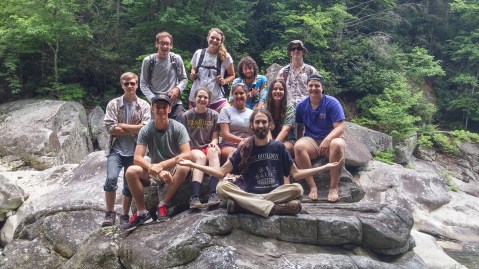
A botany class out exploring at Appalachian State University
— Jordan Willet, Appalachian State University, Boone, North Carolina, U.S.A.
Editor’s Note: BOON is the official acronym for the herbarium at Appalachian State University. A resource called Index Herbariorum compiles the acronyms for the over 3,000 herbaria around the world.
More Tennessee Ferns
Moths III complete
Thank you citizen scientists for helping complete the third expedition digitizing over 1000 images of the spectacular underwing moths! During this expedition you saw numerous specimens from Louisiana that were collected over the last 60 years. With this information, researchers can begin to examine their distribution changes, changes in flight times, changes in host plants, and impact of climate change during the last century.
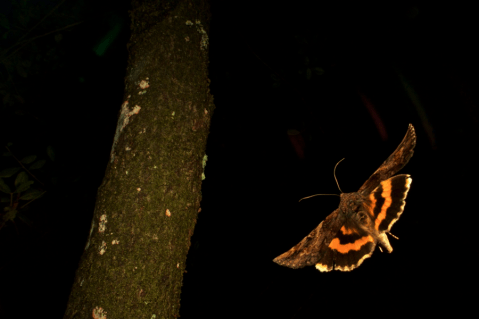
Photo by Lary Reeves
Be on the lookout for one more expedition of underwing moths. After that, we will be switching to a new type of moth, and will begin posting photos of new moth species for future expeditions. Maybe you will notice the differences!
Stacey L. Huber
McGuire Center for Lepidoptera & Biodiversity, Florida Museum of Natural History
Cambrian fossils (aka loads of trilobites!) from western North America
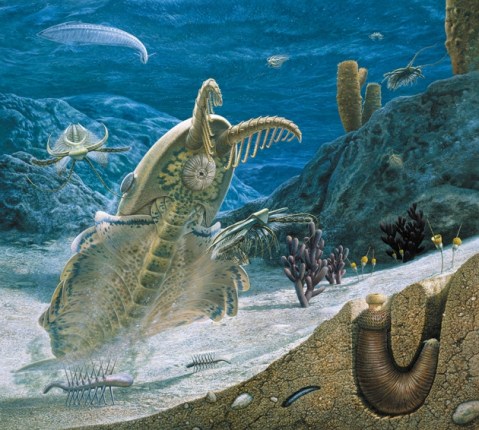
Image: John Sibbick, Natural History Museum, London.
The Cambrian period was a time of some really bizarre looking critters and so many originated at this time (about 540 million years ago) that it is often referred to as the “Cambrian Explosion.” This period of the evolution of life saw some really bizarre body plans that transformed a simple environment dominated by cyanobacterial reefs and microbes into one of very highly ornamented and unusual critters. Douglas Fox describes this landscape of rapidly changing animals in his 2016 Nature article and gives us a good overview of the role that ocean water oxygen levels played in allowing for more complex life forms to develop and flourish.
Trilobites are a very common fossil to be found throughout the Paleozoic, but the Cambrian was where they dominated the seas that covered most of North America for many millions of years. Trilobites are arthropods and frequently molt their exoskeletons in order to grow. Most fossil remains of trilobites that we have today are fossilized exuviae, or the cast off exoskeletons instead of the actual animal itself, as the external shell is discarded to allow for the animal to grow.
Trilobites are an exceptional component of the history of life on our planet; indeed, they are among the most successful animals in the history of our planet. Join us for this second expedition to transcribe labels from Cambrian fossils of western North America. Our last expedition focused on plastotypes (plaster molds of type specimens from around the world) and these fossils here are the real deal. Many of these fossils are trilobites, but keep an eye out for our own Anomalocaris and other bizarre Cambrian fossils!
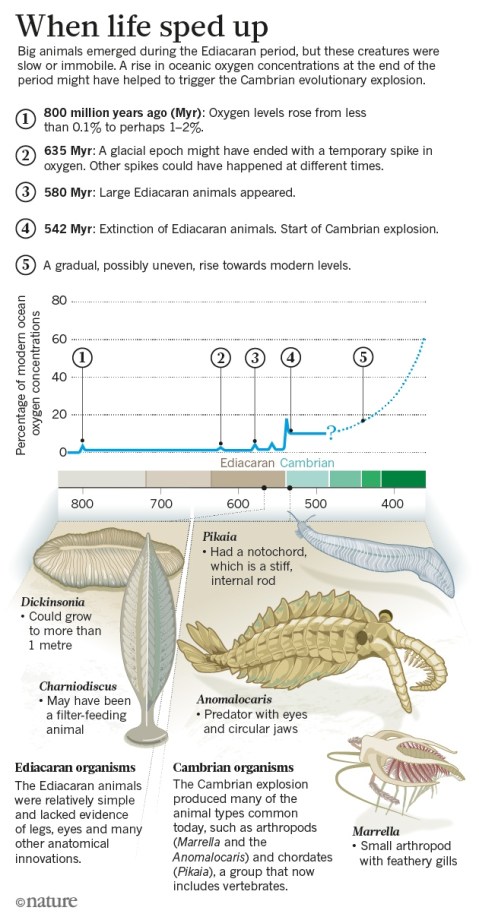
Copyright Nature Publishing Group, used with permission.
WeDigFLPlants Focuses on Spring in Florida’s Forests
Austin Mast, Florida State University

Unlocking Northeastern Forests: Complete!

Rhododendron arborescens (Pursh) Torr. / “sweet azalea”
Congratulations NfN volunteers for completing the New York Botanical Garden’s first expedition targeting vascular plants of New England!! Through your heroic efforts to catalogue over 2,300 specimens, scientists everywhere will soon have access to our complete historic collection of 300 different species of Oaks (Fagaceae), Blueberries & Rhododendrons (Ericaceae) found throughout the Northeastern US. That is no small feat, and you all deserve a tremendous round of applause!!
Or, more appropriately … *VIGOROUS RUSTLING OF LEAVES*
Fortunately, this fantastic success is only the beginning. NYBG staff and volunteers have prepared and photographed many more preserved specimens of other New England plants, which are now in need of examination by citizen scientists! Look out for the next phase of our project, Unlocking Northeastern Forests: Nature’s Laboratories of Global Change (Part II), and share in helping to advance our collective understanding of local, natural ecosystems–their historic baselines, and progressive shifts over time.
— Charles Zimmerman, New York Botanical Garden

